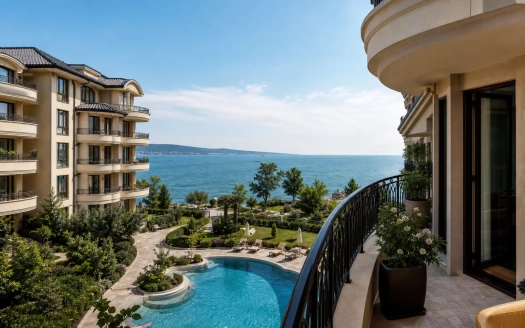

Apartment in Bulgaria for rental can be a working investment by the sea if you buy not a 'sea view', but a clear rental model: who will live there, in which months, who manages the property, and how much idle time costs. The main risk is calculating income based on summer rates while forgetting about maintenance fees, repairs, taxes, commissions, and seasonality.
In brief
- By the sea in Bulgaria, profitability often depends not on the distance to the beach per se, but on the combination of demand, infrastructure, management, and the complex’s expenses.
- Short summer rentals can yield high gross income but require active management, cleaning, advertising, reviews, and reserves for wear and tear.
- Long-term rentals are quieter, but resort properties outside major cities may have weaker and more seasonal demand.
- Before purchasing, you need to calculate not 'how much can be rented in August', but the net annual cash flow after all mandatory and potential expenses.
- Particular attention should be paid to maintenance fees, complex rules, taxes, utility payments, manager's commission, and idle periods.
- All current tax, registration, and municipal requirements should be checked at the location of the property and with a relevant specialist.
What 'income-generating apartment by the sea' means in practice
For an investor, an income-generating apartment is not necessarily the most expensive unit on the first line. Profitability arises where the entry price, tenant demand, and owner's expenses are in reasonable balance. In Bulgaria by the sea, this is especially important, as many resort properties do not operate year-round and are highly dependent on the season.
A newcomer often looks at listings like this: 'near the beach, so it will be easy to rent.' A more experienced buyer asks different questions: who is my tenant, how do they get there, are there shops and cafes nearby, can one live without a car, who will meet the guest, how quickly can a broken air conditioner be fixed, how much does complex maintenance cost, and does the complex allow commercial rentals.
A commercial approach starts with a model. One apartment may be suitable for tourists for a week, another for remote workers for a month, and a third for a long-term tenant working in Varna or Burgas. The same area in different locations will yield different risk profiles.
Where to find profitability by the sea: not just the first line
The Bulgarian coast has several types of locations. They cannot be assessed on a single scale: resort complex, historical town, bedroom community near a large city, and a quiet place for family recreation all operate differently.
Major seaside cities: Varna and Burgas
Large cities by the sea are usually interesting because demand does not only hinge on the beach season. There are locals, students, professionals, business trips, medical and family reasons for rentals. For an investor, this can mean more stable demand, especially if the apartment is located not just for vacation but for everyday living.
The downside is higher competition with regular urban housing and a more demanding tenant. For a guest or long-term resident, transport, entrance conditions, heating or cooling, internet, parking, household appliances, and noise levels are important. A sea view is pleasant, but in urban rentals, it rarely compensates for poor logistics.
Sunny Beach, Nessebar, Saint Vlas, and similar resort areas
Resort areas are attractive to a clear summer audience: tourists come for the beach, entertainment, restaurants, and walking routes. Short-term rentals can be considered here, but it’s important to remember: high visibility of demand in season does not equal stable profit over the year.
Sunny Beach are often considered a mass resort market with a large selection of apartments. Nessebar adds historical and pedestrian interest. Saint Vlas may interest buyers focusing on a quieter format of recreation and proximity to the marina or family infrastructure. However, within each location, specific complexes, access to the beach, building conditions, maintenance fees, and real competition of listings are decisive.
Pomorie, Sozopol, and more intimate destinations
Such places may attract a quieter audience: families, couples, people who come not only for nightlife but also for the sea climate, walks, the atmosphere of the old town, or wellness retreats. In such locations, it is particularly important to understand the guest profile: they may prioritize silence, parking, kitchen, balcony, lift, proximity to the waterfront, or the possibility to stay for a few weeks.
There is potential, but it is not universal. In intimate places, weak marketing of the property or inconvenient management can hit occupancy harder than in a mass resort. Before purchasing, it is useful to look not only at sales listings but also at the actual representation of similar apartments on rental platforms: photos, reviews, occupancy calendar, level of competition, quality of descriptions.
Comparison of rental strategies
| Strategy | Who it suits | Pros | Risks and expenses |
|---|---|---|---|
| Short-term summer rental | Resort apartments near the beach and tourist infrastructure | Can flexibly manage rates, use the property for personal vacations, catch high season | Seasonality, cleaning, platform commissions, wear and tear of furniture, idle periods, need for quick responses to guests |
| Medium-term rentals for a month or longer | Apartments with good kitchens, internet, workspace, and a quiet environment | Fewer check-ins and cleanings, lower operational load, easier to plan occupancy | A convincing price is needed outside the peak season, heating, bills, household comfort, and payment agreements are important. |
| Long-term rental | Urban areas of Varna, Burgas, and locations with constant demand | More predictable cash flow, less turnover, lower marketing expenses | The rate is usually less flexible, harder to use the apartment for personal purposes, a legally correct contract is important |
| Mixed model | Properties with summer tourist demand and moderate off-season demand | Can combine high season and long stays | Requires active calendar management, clear rules, and regular economic calculations |
What expenses eat up profits
Gross rental income looks attractive until you break it down into expenses. For investment purchases, it's essential to prepare an annual ownership budget in advance rather than just relying on the apartment price and expected nightly rate.
Maintenance fee and complex upkeep
For many resort complexes, the maintenance fee is one of the key expenses. It may cover the maintenance of common areas, pools, elevators, security, landscaping, and other infrastructure elements, but the terms depend on the specific complex and contract. The amount, payment order, and consequences of debt must be verified before the transaction.
A high fee is not always bad if the complex is well-maintained and helps rent the property for a higher price. But a high fee with weak demand or poor management can eat into significant portions of net income. This topic requires careful study of the material about maintenance fees in Bulgaria.
Manager or agency commission
If the owner does not live nearby, they need a person or company to respond to guests, check-in, monitor cleaning, inspect the apartment's condition, receive contractors, and address household issues. The cost of such a service may depend on the rental model, number of check-ins, level of service, and agreements.
Saving on management is risky: poor communication can lead to low ratings, cancellations, conflicts, and vacancies. But overpaying for formal management without accountability is also unwise. Request clarity on what exactly is included in the service: cleaning photos, inventory, reports, key storage, emergency visits, handling reviews, monitoring utility bills.
Cleanings, linen, consumables, and minor repairs
Short-term rentals create constant wear and tear. Even careful guests use dishes, appliances, towels, bedding, air conditioners, boilers, furniture, and plumbing more intensively than the owner during rare vacations. The budget should have a reserve for replacing textiles, small household appliances, dishes, lamps, locks, curtains, and unforeseen breakdowns.
Separately account for cleaning after each stay. If it is paid for by the guest, it still affects the competitiveness of the offering. If the owner covers it, it reduces net income. In reality, not just the fee size matters, but also the quality: a dirty apartment quickly loses its rating.
Utility payments and internet
Electricity, water, internet, television, air conditioning maintenance, and other household expenses depend on the property, season, rates, and tenant behavior. In hot months, air conditioning can be used actively, while heating is important in cooler periods. Specific conditions should be checked for the exact address and service providers.
For long-term rental, part of the payments is often transferred to the tenant by agreement. For short-term rental, the owner typically incorporates utility costs into the rate. Thus, an apartment with poor energy efficiency or outdated equipment may seem inexpensive at purchase but be costly in operation.
Taxes, local fees, and rental regulations
Income from rentals and using properties for guest accommodation may create tax and administrative obligations. They depend on the owner's status, rental format, local requirements, and current legislation. One cannot rely on advice from forums: before starting a rental, consult an accountant, lawyer, or relevant authorities in the specific community.
It's crucial for the buyer to understand in advance whether the selected property can be rented in the desired format, whether registration is needed, what reports and payments are possible, and how to properly arrange relationships with the manager and tenants. These issues should be resolved before you develop the financial model.
Discounts, Promotions, and Marketing
Empty weeks are also an expense, though not visible in the bill. During the season, the property may remain empty due to poor photos, inflated rates, weak reviews, inconvenient check-ins, or high competition. In the off-season, demand may decrease, forcing the owner to choose between discounts and an empty calendar.
Marketing is not just about posting an ad. Quality photos, honest descriptions, quick responses, clear rules, an up-to-date calendar, competitive pricing, and handling reviews are necessary. For some properties, it makes sense to promote across multiple channels, but this increases operational complexity.
How to Calculate Returns without Self-Deception
The most useful formula is not a universal percentage but a calculation sequence. First, determine a realistic annual income by month, then subtract all expenses and only then divide the net result by the full cost of entry into the property.
- Calculate the total entry price. Consider not only the price of the apartment but also the associated transaction costs, furnishing, appliances, renovation updates, listing launch, and a reserve for the first months.
- Break the year into seasons. Do not multiply the summer rate across the entire year. Evaluate the peak season separately, shoulder months, off-season, and potential downtime.
- Compare with real competitors. Look at similar apartments by location, condition, reviews, floor, distance to the beach, availability of parking, pool, and elevator.
- Deduct operating expenses. Management, cleaning, platform commissions, utility bills, internet, consumables, repairs, insurance if applicable, and complex maintenance.
- Consider taxes and mandatory fees. These need to be checked individually and calculated in your jurisdiction and in Bulgaria with a specialized professional.
- Create a stress scenario. Check what will happen if occupancy is lower than expected, maintenance fees rise, appliances break, or the season turns out to be weaker.
Practical rule: if the property only looks profitable under ideal occupancy, no repairs, and management from another country, it is not an investment but an optimistic scenario.
Checklist Before Buying an Apartment for Rent
- Understand the target audience: tourists for a week, families for a month, remote workers, long-term tenants.
- Check if there is demand not only in August but also in neighboring months.
- Compare the property with competitors on rental platforms by quality, photos, reviews, and price.
- Request the terms of the maintenance fee, what is included, and how it may change.
- Clarify the complex rules: is renting allowed, are there any restrictions on guests, pets, parking, pool, keys.
- Assess the condition of furniture, appliances, air conditioners, plumbing, electrical systems, windows, and balcony.
- Check who can manage the apartment on-site and what services are included in the commission.
- Create an annual budget for expenses with a reserve for repairs and downtimes.
- Obtain a legal check of the property before the transaction. There is a separate material on the website about checking real estate in Bulgaria before purchase.
- Check tax and registration requirements with a local specialist before starting the rental.
Which Apartment Rents Better
For rental by the sea, not only square meters are usually important. Guests need a simple, clear, and comfortable apartment: clean, bright, with functioning appliances, a good sleeping area, air conditioning, stable internet, a equipped kitchen, and easy check-in. A small studio can work if it is well located and inexpensive to maintain. A larger apartment might lose out if it has a high maintenance fee and low occupancy.
Balcony, view, pool, parking, elevator, proximity to the beach and stores increase attractiveness, but each advantage should be correlated with the purchase price and expenses. For example, a pool helps in advertising, but its maintenance usually reflects in the complex fees. First line increases guest interest but may cost more at entry and does not always yield proportionally larger net profits.
It is important not to overestimate expensive repairs. For rent, a practical, easily maintainable interior is better: durable surfaces, washable materials, spare linens, understandable furniture, minimum fragile decor. The apartment should look good in photos, but even more importantly— withstand regular use.
Red Flags for an Investor
- The seller or agent promises guaranteed returns without detailed calculations of expenses and management conditions.
- The maintenance fee is unclear, not transparently documented, or drastically differs from similar properties without explanation.
- The complex looks beautiful in photos but shows signs of poor maintenance of common areas.
- The property is located far from the beach and infrastructure but is marketed as an easy option for tourist rentals.
- There is no clarity on who will check in guests, perform cleaning, handle emergencies, and manage bill payments.
- The financial model does not include taxes, downtimes, repairs, commissions, and furniture replacement costs.
- The buyer is urged to hurry, not allowing time for legal and financial verification.
When does buying for rental make sense?
Purchasing an apartment by the sea in Bulgaria for rental makes sense if you are willing to treat it as a small hospitality business or as a long-term asset with moderate returns. This is not pure passive income: even with a management company, the owner must monitor reports, the condition of the property, expenses, and pricing strategy.
The most sustainable approach is to choose a property that has multiple usage scenarios. For example, an apartment in a location with summer demand but also suitable for off-season living. Or a city apartment by the sea that can be rented long-term, instead of relying solely on tourists. The more reasonable scenarios a property has, the lower the risk of being a hostage to one short season.
If the purchase is primarily for personal vacation, honestly separate the emotional and investment aspects. The apartment may be great for family use but mediocre for income. It's perfectly fine to consciously pay for a lifestyle rather than expecting maximum profitability.
FAQ
Can you buy an apartment in Bulgaria and rent it to tourists?
In many cases, owners consider this format, but specific requirements depend on the property, community, rental format, and current regulations. Before purchasing, it's important to check the complex's rules, local guest accommodation requirements, and tax obligations with a specialist.
What is more profitable: a studio or a one-bedroom apartment?
It depends on the location and audience. A studio is usually cheaper to buy and maintain, but it may compete in the mass segment. A one-bedroom apartment is more convenient for couples or families and can sometimes be rented more steadily, but it requires a larger budget. You should compare by net income, not by price per night.
Is the first line always better for renting?
No. The first line increases attractiveness but often raises the purchase price. If the surcharge is too high, the net return may end up being lower than that of an apartment slightly further from the beach but with good infrastructure, low costs, and strong management.
Can you manage an apartment remotely?
Technically yes, but without a reliable person on-site, it is risky. You need cleaning, key handover, condition monitoring, emergency issue resolution, and guest communication. For remote owners, the quality of management is often more important than a small difference in rental rates.
What expenses do buyers most often forget?
Buyers most often underestimate maintenance fees, downtime off-season, minor repairs, replacement of textiles and appliances, platform commissions, utility bills for short-term rentals, taxes, and the cost of proper management.
Is it worth buying an apartment in a complex with a pool?
A pool can increase appeal for tourists, especially families, but its maintenance usually reflects in the complex's expenses. The decision depends on whether the infrastructure genuinely helps increase occupancy and rates rather than just raising annual payments.
Output
An apartment in Bulgaria for rental by the sea requires sober calculation. Returns should not be sought in advertising promises but in locations with clear demand, appropriate entry price, transparent maintenance fees, good manageability, and realistic annual budgets. Before the deal, consider several scenarios, check documents and rental rules, and confirm all current tax and municipal issues with specialists.