
In brief: After switching to the euro, currency risk decreases and it becomes easier to compare Bulgarian properties with EU markets, but no one guarantees "automatic price growth." Demand in Varna is more stable due to the city and year-round living, in Burgas while resort areas experience stronger seasonality and the influence of management companies. For foreigners, key risks include legal clarity (including land under the house), construction stage (Acts 14/15/16), and actual rental economics after tax support and fees. The optimal strategy in 2026 is to buy liquidity: the right location, documents, clear expenses, and an exit strategy.
In 2026, buyers and investors assess Bulgaria as a eurozone market: calculations in euros, clearer comparisons of returns with other EU countries, and higher requirements for documents and quality of properties. This article is useful for those choosing an apartment for relocation to Varna/Burgas, as well as for those considering the coast as an investment for rental and value growth. The purpose of the text is to clarify what actually changes after switching to the euro, how different locations behave, and what to check in a transaction to avoid losing money and time.
What Changes in the Market After the Eurozone: Not Just Slogans, but Mechanics
Switching to the euro affects the real estate market not "magically," but through several practical channels.
1) Calculations and Comparability of Transactions
When the price, deposit, notary fees, and future maintenance payments are expressed in euros, it is easier for the buyer to calculate the budget and compare Bulgaria with Spain, Greece, Cyprus, etc. For investors, this simplifies the yield model and reduces currency distortions in calculations.
2) Banking Infrastructure and Payments
In practice, this means fewer conversions and fees for international transfers within SEPA, as well as a clearer structure of payments during the transaction. SEPA rules and general requirements for payment services in the EU are published by the European Central Bank.[1]
3) Requirements for Transparency and Documents
The more "European" money (private and institutional) on the market, the more sensitivity there is to legal risks: discrepancies in documents, encumbrances, disputed land, and unregistered construction stages. This is not about "more difficult to buy," but rather that "gray" schemes sell worse and stay longer on the market.
Market Condition 2026: How to Read Demand and Supply
In 2026, the key trend is a shift in demand towards high-quality, legally clear properties with understandable monthly costs. Buyers more often ask about energy efficiency, complex maintenance, parking, actual readiness of the property, and completion documents.
What Affects Price and Liquidity the Most:
- Location and Usage Scenario: "for living" and "for rental" are different markets even in one city.
- Quality and Construction Stage: a property at the pre-completion stage (Act 16) always carries more risks and requires document verification.
- Limited Supply: in good areas of Varna and in sought-after complexes by the sea, there are fewer quality lots than "showcase" listings.
Important: Any statements about "mandatory price growth after the euro" are marketing. Growth is possible, but it depends on the specific location, quality of the property, and the overall economic cycle.
Varna: Urban Liquidity and Year-Round Demand
Varna is one of the most stable markets on the coast because it is not just about the sea, but also a major city: work, universities, healthcare, infrastructure. In 2026, the most common searches in Varna are for:
- Apartments for Permanent Residence in areas with transportation and schools.
- New Builds with clear construction status and management.
- Properties "by the sea" — but with a sober calculation: not every "first line" delivers better returns when high maintenance fees apply.
Practical takeaway for investors: Varna typically offers a more consistent rental occupancy (including long-term), resulting in a more predictable cash flow. For buyers "for living," it is key to check not only the building but also the surroundings: parking, noise, construction plans, and actual access to the beach/park.
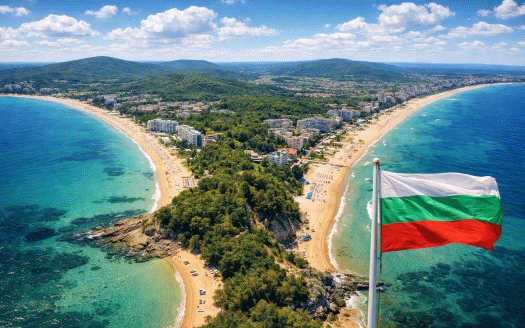
Burgas and the Southern Coast: Seasonality, Tourism, and the Role of Management Companies
Burgas as a city is a separate story, while the resort areas nearbySunny Beach, Saint Vlas, Nessebar, Ravda) represent another. Seasonality is more pronounced in the south, and the economics of a property often depend on how the complex and management company operate.
Sunny Beach
Seasonal rentals are more frequently chosen. It is important to calculate not the "gross" yield for peak months, but the annual yield: taking into account downtimes, management company fees, repairs, and maintenance taxes.
Saint Vlas
A location with a more "resort-premium" positioning and demand for quality complexes. Here, the requirements for infrastructure and service are higher, which means higher management contract values and complex rules.
Nessebar
Strong tourist appeal, but it is important to distinguish zones and types of real estate. For some properties, restrictions on renovations, building status, and usage rules are critical.
Ravda
Often chosen as a quieter and relatively affordable alternative. For an investor, it's important to assess transportation, beaches, infrastructure, and actual rental demand outside the peak season.
Foreign purchase conditions: what is really important in 2026
The transaction in Bulgaria is conducted through a notary, and the ownership is registered in the Real Estate Register of the Agency for Registration.[2] For the buyer, this means: legal verification of the property and proper document preparation are more important than "emotion discounts."
Land under the house and restrictions for non-EU
A key nuance: the rules of land ownership for foreigners depend on nationality and transaction structure. In practice, for buyers from non-EU countries, the question "is there a share of land/construction rights and how is it documented" is one of the first checks. The legal regime of ownership and property rights is regulated by Bulgarian property law.[3]
Building and acts 14/15/16
If you are purchasing in a new build, the stage matters. Bulgarian practice uses stages related to the documentation of construction and commissioning. The verification should include documents in accordance with the ZUT (Law for the Structure of the Territory) and the actual readiness of the property.[4]
Taxes and annual expenses
Annually, owners pay local taxes and waste collection fees (household waste fee) according to the rules of the Local Taxes and Fees Act.[5] Specific rates and methodologies vary by municipality, so before purchase, you should request an estimate specifically for your property: this affects net returns.
Inreal4u practice: what to check before the deposit and where mistakes are most often made
Checklist before making a deposit
- Ownership and encumbrances: check with the Property Register (registrations, mortgages, seizures).[2]
- Cadastre and identifier: conformity of the property with documents and the Cadastre map.[6]
- Building status: whether it is put into operation, what documents the builder/seller has (according to the Spatial Development Act).[4]
- Complex expenses: support fee, renovation fund, rental rules, fines, restrictions on pets/parking — all information must come from documents, not "word of mouth."
- Utility contracts: electricity/water, existing debts, and the process of re-registration.
Typical buyer mistakes
- They buy "sea view," ignoring the economics: high support fees and seasonal downtimes eat into profitability.
- They do not distinguish between "apartment" and "studio in a complex" in the documents: It is important how the property is recorded and how it can be used.
- They make a deposit without verification: then encumbrances or issues with construction documents come to light.
- They consider profitability based on the best 8 weeks of the season: the investment model should be annual and conservative.
Pitfalls of the coast
On the coast, situations often arise where a property is beautiful but 'complex': disputed common areas, unclear management rules, inflated annual fees, restrictions on short-term rentals within the complex. These risks are not always visible during a viewing — they are evident in the documents.
Pros and cons of the market after the Eurozone (honestly)
Pros
- Less currency uncertainty: budgeting and calculations in euros are easier to plan.
- Higher trust in the market: more attention to legal clarity and transparency of payments.
- Clearer comparison with the EU: easier to assess alternatives and profitability.
Cons
- Fewer 'cheap mistakes': the market often punishes legal and management risks with lower liquidity.
- Quality properties appreciate faster than average: a good product becomes scarce.
- For resorts, seasonality does not go away: the euro does not eliminate downtimes and complex costs.
Conclusion: strategy 2026 for Varna, Burgas, and the coast
After Bulgaria joined the eurozone, the market became more 'investment readable': fewer currency surprises, a greater role of documents, costs, and quality of the property. Varna remains a strong bet for living and more stable rentals, Burgas and southern resort areas are for those who know how to calculate seasonality and choose complexes with adequate management.
Recommendation from Inreal4u: in 2026, choose not the 'lowest price', but liquidity — location, legal purity, clear annual expenses, and a realistic scenario for rental/resale. We accompany transactions in Varna, Burgas, and along the coast: from selection and negotiations to registry checks, working with a notary, and controlling construction documents.
Sources
- European Central Bank — SEPA (Single Euro Payments Area)
- Registry Agency — Property Register (Registry Agency, Bulgaria)
- Property Act (lex.bg — publication of the legal act)
- Law for the Structure of the Territory (ZUT) (lex.bg — publication of the regulatory act)
- Local Taxes and Fees Act (lex.bg — publication of the legal act)
- Agency for Geodesy, Cartography, and Cadastre — Cadastre (AGKK)