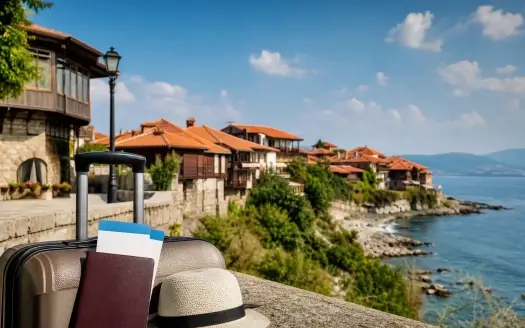

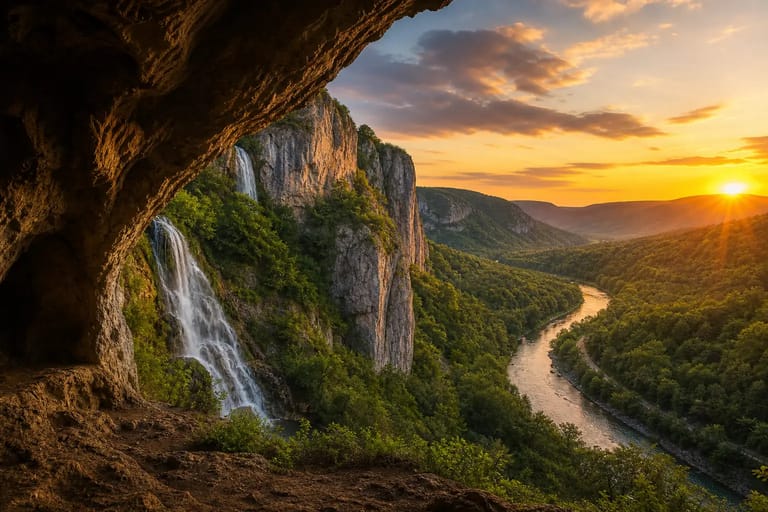
A brief answer: A practical guide to Bulgaria's natural attractions off the standard routes: caves, rock phenomena, waterfalls, canyons, and quiet locations for independent trips.
In brief
- The material addresses the topic in simple language and without unnecessary fluff.
- Facts that may change should be verified with current official sources or qualified specialists.
- The structure helps quickly find the main points: steps, nuances, FAQs, and useful internal links.
Unusual places in Bulgaria are not just seaside resorts and ancient towns, but caves with immense vaults, stone arches, canyons, forest waterfalls, and rocky fields that are often more conveniently accessed by car and with plenty of time. The best approach is to choose the region, season, and difficulty level of the route, rather than just collecting beautiful points on the map.
- For the first trip the Devetashka Cave, Prohodna, Krushunski Waterfalls, Belogradchik Rocks, and the Wonderful Bridges are perfect.
- For quiet routes look towards the Rhodopes, Vrachanska Balkan, the areas of Madjarovo, Hotnitsa, the Emenskii Canyon, and northern Black Sea.
- For caves important considerations include shoes, a flashlight, warm clothing, and checking the visiting regime: some sites may only be open under certain conditions.
- For waterfalls the best times are usually spring and after rain, but trails can be slippery during this period.
- For an independent route it’s better to plan for fewer points in a day: mountain roads, winding paths, and short daylight can easily disrupt plans.
Why Bulgaria's nature is often more interesting than standard routes
У Болгарии компактная территория, но очень разный рельеф: Балканские горы, Родопы, Рила, Пирин, Дунайская равнина, Черноморское побережье. Поэтому за один отпуск можно увидеть карстовые пещеры, вулканические and известняковые скалы, ущелья, минеральные районы, высокогорные озера and лесные водопады. При этом многие природные локации расположены вне популярных туристических коридоров София — Пловдив — море.
Главное отличие таких мест — они требуют подготовки. Там может не быть развитой инфраструктуры, кафе у входа, понятной навигации на русском или регулярного общественного транспорта. Зато именно в этих точках Болгария раскрывается как страна для медленного путешествия: с небольшими городами, сельскими дорогами, местными тропами and неожиданно сильными пейзажами.
Caves of Bulgaria: from the 'Eye of God' to underground rivers
Caves are one of Bulgaria's strongest natural narratives. Some are equipped for regular visitors, some require a guide, and others should only be considered by experienced cavers. For a traveler, what matters is not the 'deepest' or 'longest' cave, but safety, accessibility, and experience.
Prohodna: light windows in the rock vault
Prohodna Cave is known for its two natural holes in the ceiling, often referred to as 'eyes'. This is one of Bulgaria's most recognizable natural sights: a huge stone corridor, diffused light, and the feeling of a cathedral without walls. The place is suitable for those who want a strong visual impact without a long hike, but even here non-slip shoes and caution after rain are necessary.
Devetashka Cave: scale, birds, and a huge hall
The Devetashka Cave in the northern part of the country impresses with the size of its entrance, greenery inside, and holes in the vault. It is often chosen in conjunction with the Krushunski Waterfalls, as these spots are conveniently combined for a day trip by car. It's important to remember that there may be restrictions in the caves due to bat protection and other natural factors, so check the current visiting regime before your trip.
Yagodinska Cave and Devil's Throat in the Rhodopes
The Rhodopes offer a more 'mountainous' travel experience. Yagodinska Cave and Devil's Throat Cave are usually perceived not only as separate attractions but also as part of the route through Trigrad Gorge. Here, not only the underground chambers matter but also the road itself: narrow valleys, forests, cliffs, and Rhodope villages. This direction is better not to plan in haste, especially if the driver is not used to mountain roads.
Syewa Dupka: a classic underground route
Syewa Dupka is a good example of an equipped cave often chosen for exploring underground formations: stalactites, stalagmites, and halls of various characteristics. Before your visit, it's worth clarifying if entry is possible without a group, how tours are organized, and if there are any time restrictions. Even in equipped caves, the temperature is usually lower than outside, so a light jacket won't be unnecessary.
Rocks and stone phenomena: where to find the most unusual landscapes
The natural rock attractions of Bulgaria are great because they are often accessible without complex trekking. However, they have another feature: lighting plays a crucial role. Belogradchik, stone arches, and coastal cliffs are especially expressive in the morning or closer to sunset when the relief becomes voluminous.
Belogradchik Rocks: a natural fortress of the northwest
The Belogradchik Rocks are one of the most unusual landscapes in Bulgaria: reddish stone figures, towers, walls, and panoramas over hilly terrain. The place is known but still not perceived as a crowded seaside route. If you have time, it's better not to limit yourself to one viewpoint: the impression changes depending on the angle, weather, and height.
Wonderful Bridges: stone arches in the Rhodopes
The Wonderful Bridges, or 'Chudnite Mostove', are natural stone arches in the Rhodopes. This is a good choice for those who want to see natural architecture without a long extreme route. In the off-season, be more cautious: in the mountains, the weather changes quickly, and road conditions can differ from lowland areas.
Pobiti Kamani: stone forest near Varna
Pobiti Kamani is often referred to as the 'stone forest'. This landscape of vertical stone columns sharply contrasts with Bulgaria's usual beach images. The location is convenient for those who live or vacation near Varna and want to make a short nature excursion without a long drive into the mountains.
Stone mushrooms and the rocks of the Rhodope
In the Rhodopes, there are several places where erosion has created forms resembling mushrooms, towers, or fantastic figures. These locations are particularly interesting to photographers and travelers who enjoy short stops between cities and mountain villages. However, it is important not to turn the trip into a race: the small roads in the Rhodopes require attention, and stops often take longer than they might seem on the map.
Waterfalls and Canyons: When to Go and What to Expect
The waterfalls of Bulgaria are highly dependent on the season. After snowmelt and rains, they appear more powerful, but the trails can be wet and slippery. During the dry summer season, some cascades become modest; however, the routes are usually easier for family walks. Therefore, the right question is not "which waterfall is the most beautiful," but "which waterfall will be safe and sufficiently full right now."
Krushuna Waterfalls: Cascades, Turquoise Water, and Forest
The Krushuna Waterfalls are one of the most photogenic natural routes in northern Bulgaria. They are often combined with the Devetashka Cave, as both sites are located within a logical short road trip. The place can be popular on weekends and during the warm season, so those seeking tranquility should plan for an early arrival or a weekday visit.
Hotnitsa Waterfall and Canyon Near the Village of Hotnitsa
The Hotnitsa area is interesting for its combination of waterfall, wooden bridges, and canyon relief. This is a good example of a place that feels intimate but requires caution: the paths, stones, and descents after rain can be hazardous. If traveling with children or elderly relatives, consider not only the length of the route but also the quality of the surface.
Emen Canyon: A Walk for Those Who Love Gorges
Emen Canyon attracts with its rocky walls, river, and the feeling of a natural corridor. It is suitable for those who want more than just a viewpoint, but are not ready for a full mountain hike. The state of the trails, bridges, and railings may vary, so it's worth checking for fresh reviews and local warnings before your trip.
Waterfalls of the Balkan, Rila, and Rhodopes
Bulgaria has many lesser-known waterfalls in mountainous areas. Some are near eco-trails and villages, while others require a good level of physical fitness. If the route goes through the forest, do not rely solely on mobile connectivity: download a map for offline use, take water, charge your phone, and inform someone of your destination.
Comparison of Destinations: What to Choose for Your Travel Format
| Price range | Best Types of Places | Who It Suits | Main Risks |
|---|---|---|---|
| One Day by Car | Prohodna, Devetashka Cave, Krushuna Waterfalls, Pobiti Kamani | For those who want strong impressions without challenging trekking | Overestimating travel time, crowds on weekends, slippery sections |
| Mountain Weekend | Rhodopes, Trigrad Gorge, Chudnite Mostove, Yagodinska Cave | For fans of serpentine roads, gorges, villages, and slow routes | Weather, narrow roads, limited infrastructure off-season |
| Family Walk | Equipped caves, short eco-trails, accessible waterfalls | For families with children and travelers without hiking experience | Steps, wet stones, cold in caves, children's fatigue |
| Photo Trip | Belogradchik Rocks, Stone Arches, Canyons, Northern Coast | To those who are ready to adapt to light and weather | Fog, strong wind, lack of convenient parking at some points |
| Quiet route away from the crowd | Small waterfalls, local eco-trails, the regions of Majarovo and Vrachanski Balkan | Experienced independent travelers | Poor navigation, few services, need to check accessibility in advance |
How to plan a route: practical scheme
A common mistake among travelers is trying to see a cave, waterfall, fortress, monastery, viewpoint, and still make it to the sea in one day. Distances on the map in Bulgaria may look small, but mountain roads, repairs, rural areas, and winding paths significantly change actual travel time.
- Choose one region. For example: northwest with Belogradchik, north with Devetashka and Krushuna, the Rhodopes with Trigrad and Chudnite Mostove, the coast with Pobiti Kamani and the cliffs by the sea.
- Determine the main attraction of the day. Everything else should be an addition, not an obligatory race.
- Check for seasonality. Water is important for waterfalls, visiting hours for caves, weather and road conditions for mountains.
- Allow for extra time. Especially if traveling with children, elderly people, or if you are driving in Bulgaria for the first time.
- Plan meals and fuel in advance. Services in small settlements may not operate as expected by tourists.
Checklist before the trip to the caves, rocks, and waterfalls
- Check current accessibility: is the cave open, is the path closed, are there seasonal restrictions?
- Wear shoes with good grip: wet limestone, clay, and wooden paths can be slippery.
- Bring a light jacket: it can be cool in caves and gorges even in summer.
- Download an offline map and save the parking location.
- Take water, a small snack, cash for unexpected expenses, and a power bank.
- Do not go beyond barriers and do not approach the water where there is no trail.
- If the route is remote, inform your loved ones of your approximate plan and return time.
- After heavy rains, review the route: the waterfall may be more beautiful, but the approach may be more dangerous.
Where to go if you live in Bulgaria or are coming for a long stay
Для резидентов and тех, кто проводит в стране не одну неделю, природные маршруты — отличный способ понять Болгарию за пределами курортной картинки. Из Софии удобно исследовать Искырское ущелье, Врачанский Балкан, пещеры северного направления and Рилу. Из Пловдива логично ехать в Родопы, к каменным феноменам, ущельям and горным селам. Из Варны — к Побити камъни, северным скалам побережья and природным зонам вокруг морских городов.
Если вы планируете много ездить по стране, автомобиль дает заметно больше свободы, чем общественный транспорт. Но покупка, регистрация, страховка and технические вопросы зависят от статуса человека and актуальных правил, поэтому такие детали лучше проверять отдельно у профильных специалистов and в официальных источниках.
Safety and eco-friendly travel logic
Природные места Болгарии часто выглядят доступными, но это не парк аттракционов. В пещерах нельзя трогать образования, шуметь в местах обитания летучих мышей and оставлять мусор. На скалах не стоит подходить к краю ради кадра, особенно при ветре. У водопадов опасны мокрые камни, неожиданные обрывы and попытки перейти поток вне оборудованного места.
Экологичная логика проста: идти по существующим тропам, не заезжать автомобилем туда, где это не предусмотрено, не разводить огонь вне разрешенных зон, не забирать камни and растения «на память». Именно такие мелочи сохраняют локации открытыми and приятными для следующих посетителей.
Examples of short routes without overload
Northern Bulgaria: cave plus waterfalls
A classic idea is to connect the Devetashka Cave and Krushuna Waterfalls in one day. This is not the most secret route, but it well shows how diverse northern Bulgaria can be. To avoid rushing, do not add too many extra points.
Rhodopes: gorge, cave, and rock arches
For the Rhodopes, it's best to dedicate at least a weekend. Trigrad Gorge, caves, Chudnite Mostove, and Rhodope villages create a complete journey where the road is part of the experience. Here, it is especially important to book accommodation in advance during the high season and check road conditions in the off-season.
Northwest: Belogradchik and surroundings
The Belogradchik Rocks are well suited for a separate trip rather than a random stop between tasks. The northwest of Bulgaria is often underestimated, even though it is where you can feel the expansiveness, small towns, and unusual relief without resort chaos.
Coast without the beach: stones, rocks, and wind
If you are on the Black Sea, don’t limit yourself to the beach. The Pobiti Kamani, rocky sections of the northern coast, and natural capes reveal another character of the region. The sea breeze can be strong, so caution and closed shoes are important for walks along the rugged shores.
FAQ: practical questions
Can you see unusual places in Bulgaria without a car?
Yes, but the selection will be limited. Some caves, waterfalls, and eco-trails are accessible through nearby towns or villages, but transportation schedules, transfers, and the last bus need to be checked in advance. For a short vacation, a car usually offers more flexibility.
What places to choose for the first trip?
For a first acquaintance, locations with easy access and strong visual impact are suitable: Prohodna, Devetashka Cave, Krushuna Waterfalls, Belogradchik Rocks, Pobiti Kamani, or Chudnite Mostove. The specific choice depends on where you are: in Sofia, Plovdiv, Varna, Burgas, or in the mountain region.
When is the best time to visit the waterfalls in Bulgaria?
Waterfalls are often more expressive in spring and after rains, but at the same time, trails can be wet and slippery. In summer, the routes are usually more comfortable for walks, but some cascades may appear less powerful. It’s helpful to look at recent photos and local reviews before going.
Is a guide needed for caves?
For equipped tourist caves, visits are usually organized according to established rules, sometimes with accompaniment. It is not recommended to go into unprepared caves without experience, equipment, and a local specialist. The visiting schedule should be clarified for each specific site.
Are such trails suitable for children?
Yes, if you choose short and safe locations, don’t plan too many points, and consider the temperature in the caves, steps, wet stones, and fatigue. For children, routes with a quick ‘wow effect’ and the ability to return easily to the car work best.
What is the most dangerous in Bulgaria's natural locations?
Most problems are caused not by wild animals, but by overestimating one's abilities, poor footwear, wet stones, approaching cliff edges, and lack of time. In the mountains, weather, fog, short daylight hours, and road quality are additionally important.
Output
Unusual places in Bulgaria should be explored not by the principle of "seeing everything," but through a sensible choice of region and season. Caves offer scale and dramatic light, rocks provide panoramas and unusual geometry, waterfalls showcase vibrant seasonal nature, while canyons and gorges create a real sense of adventure. The better the preparation, the less random risk, and the more impressions remain from the country outside the standard tourist routes.