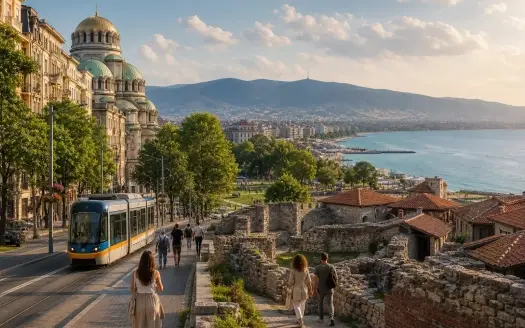

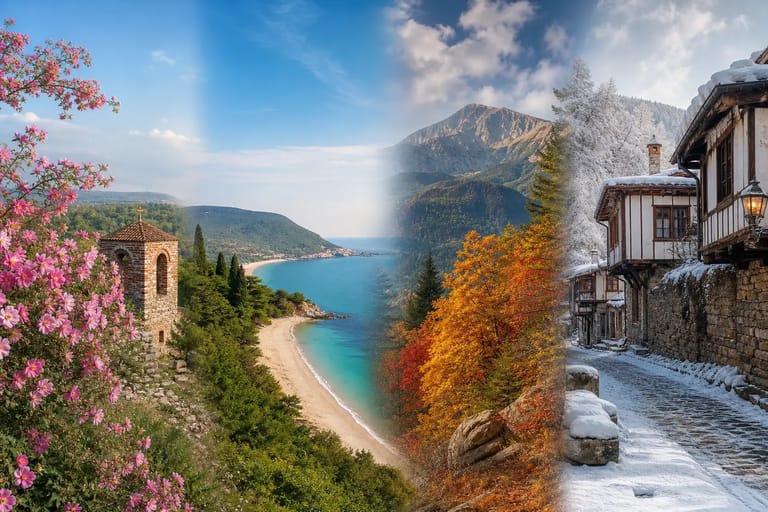
The best time for Bulgaria depends on the purpose of the trip: for the sea, people often choose the period from early summer to early autumn; for excursions, spring and autumn are more comfortable; and for the mountains, winter is for skiing and warm months are for trekking. The weather in Bulgaria by month varies significantly between the coast, plains, and highlands.
In brief
- For beach vacations the summer months and early autumn are the most predictable, but peak season means more people and higher demand for accommodation.
- For excursions April, May, September, and October are more convenient: there's usually less heat, making it easier to walk through old towns and fortresses.
- For skiing trips winter is the main focus, but the condition of the slopes and the operation of the lifts depend on the resort and the weather of that specific season.
- For trekking in Rila, Pirin, and the Rhodopes, it's better to choose warm periods, but even in summer, the weather in the mountains can change abruptly.
- For buying or viewing properties by the sea it's useful to come not only in summer: the off-season better shows how the area lives without the tourist peak.
How Bulgaria's climate works: why the month is just as important as the city
Bulgaria seems like a small country, but the weather conditions within it are not the same. The Black Sea coast follows a gentler maritime rhythm: the sea warms up slowly in spring and cools down just as slowly in autumn, so the beach season does not coincide with the first warm day on the calendar. The interior areas, including Sofia, Plovdiv, Veliko Tarnovo, and the plains, feel the contrast between summer and winter more sharply. The mountains add a separate scenario: it is cooler there, conditions change more often, and in the high parts, the season depends not only on the month but also on the height of the route.
Therefore, the question of 'when to go to Bulgaria' is better divided into three practical tasks: sea, mountains, and excursions. The same month may be good for walking in Nessebar but not ideal for swimming; convenient for sightseeing in Plovdiv but too unstable for a challenging high-altitude route. Below is a month-by-month calendar with cautious guidelines that will help you choose the period and not raise expectations too high.
Weather in Bulgaria by Month: Comparative Table
| Month | Sea | Mountains | Excursions | Who It Suits |
|---|---|---|---|---|
| January | Not beach season, calm and windy coast | Winter season, but conditions depend on the snow | Possible if ready for cold and short days | For lovers of tranquility, winter cities, and skiing |
| February | Beaches are empty, weather is changeable | Usually one of the winter months for resorts | Good for city trips without crowds | For those not afraid of coolness |
| March | Too early for swimming, winds possible | Transition period, it can still be winter in the mountains | Gradually more comfortable, but warm clothing is needed | For budget travelers and those who love the off-season |
| April | For walks by the sea, not for a classic beach | Low routes are better than high ones | A good month for cities and nature | For excursions, photos, and gentle spring |
| May | The start of the resort mood, the water may still be cool | Suitable for light routes | A very favorable month for active trips | For families, road travelers, nature lovers |
| June | The beginning of a full summer holiday | Good for nature, but check the forecast | You can still actively stroll, especially in the morning | For those who want summer without peak crowds |
| July | Peak beach season | Cool mountain routes are popular | It can be hot in the cities | For the sea, family vacations, early excursions |
| August | The most summery scenario, high demand | Good for the mountains, but thunderstorm risks are important | Better to plan for the morning and evening | For the beach and combined recreation |
| September | Often a comfortable velvet period | Good for trekking with a stable forecast | One of the best months | For couples, families not tied to school holidays |
| October | Swimming is no longer the main scenario | A beautiful but changeable autumn period | Great for cities, wine and cultural routes | For calm trips and property viewings |
| November | Season of tranquility by the sea | Transition to winter, conditions unpredictable | Possible, but the day is shorter and the weather grayer | For leisurely trips without the resort atmosphere |
| December | Not a beach season | The beginning of winter interest in resorts | Suitable for cities, fairs, and short routes | For a winter atmosphere and mountains |
Winter: December, January, February
Winter in Bulgaria is not a single scenario. On the coast, people often come not for the weather, but for the peace: walks along the sea, empty promenades, quiet old towns. The beach season is closed, some tourist infrastructure may be operating limited hours, and the wind by the water feels stronger than in the cities inland.
In the mountains, winter is the time for resorts like Bansko, Borovets, and Pamporovo. However, it is important not to perceive the calendar as a guarantee of perfect snow: the quality of slopes, opening of skiing zones, and operation of lifts depend on the weather, technical preparation, and specific resort decisions. It is advisable to check fresh data on the resort's official channels or with the accommodation operator before booking.
For excursions, winter suits those who enjoy short routes, museums, cafes, and old centers without crowds. Sofia, Plovdiv, Veliko Tarnovo, and Nessebar are experienced differently in winter: less hustle, more local life, but the day is shorter, and a backup plan for rain or cold is essential.
Spring: March, April, May
Spring is one of the most underrated periods for traveling in Bulgaria. March can still be capricious: one day spring is felt, and the next cold wind or rain returns. This time suits those who do not build their vacation around swimming and are ready to adjust plans flexibly.
April is often perceived as a month of walks, green nature, and awakening cities. It is still early for beach relaxation, but the coast is convenient for long walks, photography, and exploring areas without summer density. If you are considering property by the sea, spring helps to see a more laid-back, everyday side of the resorts: what shops are open, how transport looks, how noisy or empty a particular complex is.
May often becomes a successful compromise: it is already pleasant to be outdoors, it is easier to plan excursions, and resort areas gradually acquire a summer mood. However, the sea may remain cool, so don't promise yourself daily swimming. May is great for Nessebar, Sozopol, Balchik, Varna, Burgas, Plovdiv, Rila Monastery, and other destinations where walks, views, and comfortable activities are essential.
Summer: June, July, August
Summer is the main answer for those heading to Bulgaria for the sea. June is often chosen by travelers who value balance: summer atmosphere, but not always maximum heat and not necessarily the densest flow of vacationers. At the beginning of the month, the water can be refreshing, especially after windy periods, and beaches and cities are usually perceived more calmly than in the peak season.
July and August are the classic high season on the Black Sea. During this time, it is better to think ahead about accommodation, transfers, parking, beach logistics, and excursion schedules. Daytime walks through the old stone towns can be tiring, so it's wiser to schedule excursions in the morning or closer to the evening. For families with children, shade, sun protection, access to water, and the ability to return to the room during the hottest hours are important.
Mountains become an alternative to hot plains in summer. In Rila, Pirin, and the Rhodopes, routes of varying difficulty can be planned, but mountain weather does not necessarily match the forecast for the nearest city. Even in warm months, it's advisable to take a layer for wind and rain, choose routes based on skill level, and check trail conditions from local sources or organizers.
Autumn: September, October, November
September is often called the most convenient month for those who want to combine sea and excursions. The summer heat gradually recedes, water usually retains heat longer after the season than in spring, and walks in old towns become easier. This is a good period for couples, independent travelers, and families not tied to school vacations.
October is a strong month for excursion Bulgaria. Plovdiv, Veliko Tarnovo, Arbanasi, Sofia, wine and nature routes are revealed more calmly than in summer. On the coast, swimming should no longer be the centerpiece of the program, but walks, restaurants, views, and exploring neighborhoods remain relevant. For property buyers, this is a useful season: resort areas become less decorative, and it’s easier to assess everyday infrastructure.
November is a month for those who travel without beach expectations. The weather can be gray, the day noticeably shorter, and some seasonal spots close or operate on reduced schedules. However, prices and the occupancy of tourist spots are often perceived more leniently, and the trip can be suitable for quiet exploration, business tasks, or short city weekends.
When to go to the sea in Bulgaria
For a full beach holiday, it's more logical to choose a period when the summer weather is established and the sea is warm. Usually, this is summer and early autumn, but specific feelings depend on wind, currents, the chosen resort, and personal tolerance to cool water. The northern and southern coasts may differ in mood: some have more urban format, others have resort complexes and seasonal infrastructure.
If warm evenings, beach bar operations, children's infrastructure, and a wide variety of entertainment are important to you, aim for the high season. If tranquility, walks, lower density of people, and the ability to combine the sea with excursions are more important, consider June or September. For vacations with small children, it is particularly important to check not only the weather but also the type of beach, water entry, availability of shade, nearby medical assistance, and transport accessibility.
When to go to the mountains
The mountains of Bulgaria should be divided into winter sports and summer-autumn routes. For skiing and snowboarding, winter months are chosen, but a trip cannot be planned solely based on the calendar: before paying for accommodation and ski passes, current conditions at the selected resort should be checked. In warm seasons, the mountains are suitable for hiking routes, lakes, monasteries, panoramic roads, and escaping the heat.
For beginners, it is better to choose marked short routes, not to leave late, and to have water, a raincoat, a warm layer, and an offline map. For routes in the high mountains, experience, footwear, weather forecast, and understanding the ascent and descent times are important. If the trip includes the Rila Lakes or other popular spots, it's worth checking public transport, lifts, and access restrictions in advance, as these details can change.
When to go on excursions in Bulgaria
For an excursion trip, the best months are those when you don’t have to battle heat or winter dampness. Spring and autumn are particularly convenient in this regard. Plovdiv in one day, Veliko Tarnovo and Arbanassi for the weekend, Nessebar off-peak, Sofia with museums and parks — all these routes are easier to enjoy when you can walk at a leisurely pace.
Excursions are also possible in summer, but they require discipline: an early start, a break in the middle of the day, water, a headgear, and comfortable shoes. In winter, it's better to shorten the walking parts and allocate more time for cafes, museums, and transfers. If you're going to small towns, check the transport schedules and opening hours of attractions in advance: they may differ from the summer.
Checklist for choosing a month for your trip
- Define your main goal: swimming, skiing, trekking, excursions, property viewing, or a quiet winter trip.
- Choose a region: beach, plains, Sofia and the western part of the country, Rila, Pirin or Rhodopes.
- Check the seasonality of the infrastructure: beach services, lifts, museums, restaurants, public transport.
- Compare comfort, not just temperature: wind, humidity at sea, length of day, chance of rain, and personal tolerance to heat.
- Have a backup plan: a museum instead of a hike, a city instead of a beach, a short route instead of a mountainous one.
- Pack your suitcase in layers: even in summer in the mountains, a warm layer is needed, and in spring and autumn — protection from rain and wind.
Practical scenarios: which month to choose
If you are going for the first time
For a first acquaintance with Bulgaria, it’s convenient to choose May, June, September, or October. These months allow you to see the country beyond just the beach or the winter resort. You can combine Sofia or Plovdiv, one or two historical towns, the coast, and a natural route without excessive weather burdens.
If the main goal is the beach with children
It's better to plan your trip during the stable summer vacation period and choose a resort not just by name but also by practical parameters: gentle entry to the water, distance to the beach, noise, availability of kitchen, pharmacy, transport, and shade. During the peak season, it’s advisable to book in advance and not overload the itinerary with distant excursions.
If you are choosing an area for living or purchasing
Don’t limit yourself to August. A summer resort may look vibrant, but it doesn’t always reflect the real year-round life. It’s useful to visit in spring or autumn, stroll through the area in the morning and evening, check the shops, transport, parking, noise, condition of the complex, and neighboring developments. For real estate matters, study legal and financial issues separately, as the weather is just one element of the decision.
FAQ
When does the beach season start in Bulgaria?
The beach atmosphere usually appears at the beginning of summer, but the comfort of swimming depends on the warming of the sea, the wind, and the specific coast. If swimming is critical, it’s better not to plan a trip during the earliest spring period and to check fresh forecasts before departure.
Can you swim in Bulgaria in September?
September is often successful for the sea as the water doesn't cool down immediately after summer. However, it's not the same every year: windy days, rain, and cooling can occur. To be safe, choose a flexible schedule and a hotel with alternatives in case of bad weather.
When is it least hot during excursions?
For excursions, spring and autumn are usually more comfortable. April, May, September, and October generally suit hiking routes better than mid-summer. You can also travel in winter, but the days are shorter and warm clothing is needed.
When is the best time to go skiing in Bulgaria?
Focus on the winter months, but the exact choice depends on the resort, altitude, snow conditions, and the operation of lifts. Check current updates from the specific resort and cancellation policies before booking.
Which month to choose for the Rila Monastery and Rila Lakes?
The Rila Monastery can be included in the itinerary during different seasons if the road and weather permit. For the alpine area, including the lakes, the warm period is usually more convenient, but it is essential to check the forecast, transport, lifts, and the condition of the route before the trip.
Is it worth going to the sea in Bulgaria in May?
May is good for walks, excursions, and a peaceful holiday by the sea, but it may not always be suitable for those expecting guaranteed warm water. If the goal is daily swimming, it is safer to consider a later period.
Output
The weather in Bulgaria by month helps to correctly choose not only the date but also the format of the trip. Summer and early autumn are for the sea, winter is for skiing plans, and spring and autumn are for excursions, cities, and meaningful exploration of areas. The most reliable strategy is to plan the route based on the goal, region, and backup options, and to check the latest forecast and the operation of the necessary infrastructure before the trip.