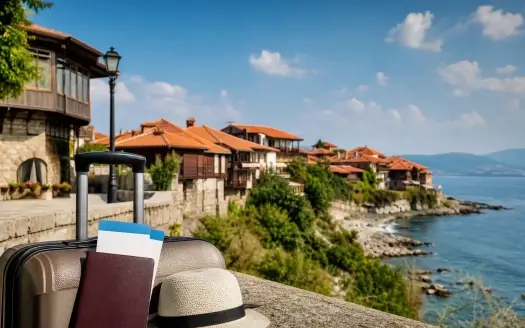

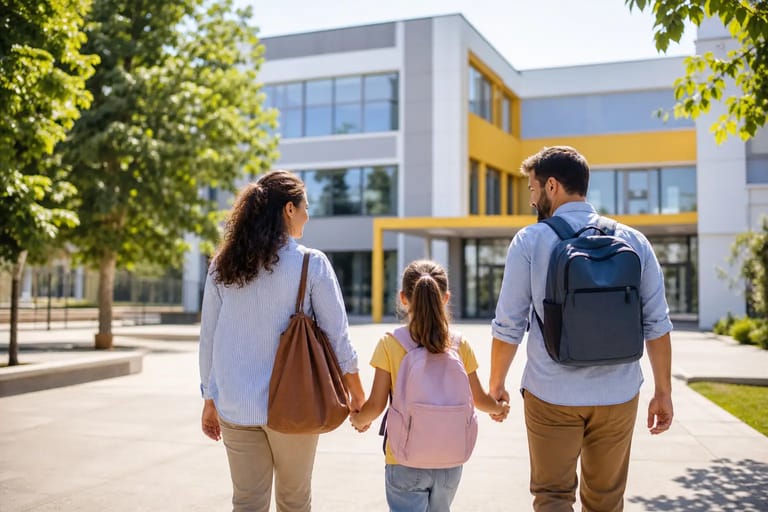
Schools and kindergartens in Bulgaria for foreign children are usually accessible, but the admission process depends on the child's age, city, family's status, availability of spots, and chosen format: municipal kindergarten, state school, private or international school. The main concerns for parents are language of instruction, documents, adaptation, and the actual logistics from home to the institution.
In brief
- State system is focused on education in Bulgarian; for a foreign child, the key risk is not the curriculum, but language adaptation.
- Municipal kindergartens often depend on the residence address, waiting lists, and local regulations; in popular areas, spots may be limited.
- Private kindergartens and schools offer more flexibility regarding languages, schedules, and adaptation, but conditions and costs need to be checked directly.
- International schools are suitable for families planning further relocation or seeking education under a non-Bulgarian curriculum.
- Documents and admission deadlines vary by municipality and educational institutions, so they must be confirmed with the school, kindergarten, or relevant agency.
- The best choice depends not only on ratings but also on the residential area, transport options, child's language skills, budget, and the family's length of stay in Bulgaria.
How the education system is structured in Bulgaria
The Bulgarian education system generally resembles the European one: there is a preschool stage, elementary school, subsequent classes, and then specialized, vocational, or academic tracks. For expatriate families, the practical path is more important than the formal structure: where the child can enter immediately after relocation, how the child will understand lessons, how the school interacts with foreigners, and what to do with documents from another country.
In Bulgaria, there are state and municipal institutions, private kindergartens and schools, as well as international schools. State schools generally operate under the national program and in Bulgarian. Private institutions may follow the Bulgarian curriculum, use enhanced foreign language studies, or offer their own educational model. International schools are more often chosen by families prioritizing continuity with another education system or the possibility of entering foreign universities.
The exact rules of compulsory education, age limits, admission procedures, and exceptions depend on current regulations and may change. Before making a decision, it's advisable to verify information with a specific school, municipality, or competent specialist, especially if the family has a temporary status, the child arrived in the middle of the school year, or educational documents were issued outside the EU.
Kindergartens in Bulgaria: municipal, private, and international formats
Municipal kindergarten
Municipal kindergartens are the most natural option for families planning to live in Bulgaria permanently and want their child to assimilate into the Bulgarian environment more quickly. In such kindergartens, the main language of communication is Bulgarian. This aids adaptation, but the first months can be challenging, especially if the child is older than preschool age and has not heard Bulgarian speech before.
Admission to a municipal kindergarten is usually linked to local regulations: residence address, child's age, availability of free spots, application submission deadlines, and priorities set by the specific municipality. In large cities and areas with high demand, places may be limited. In small towns and villages, the situation can be easier, but this is not a universal rule.
Private kindergarten
Private kindergartens are often chosen by families needing gentle adaptation, smaller groups, extended hours, English or another foreign language, additional activities, more flexible meals, or personalized approaches. It is important not to perceive the term private as an automatic guarantee of quality. Parents should consider educators, safety, language of communication, daily routine, reviews from real families, and transparency of contract terms.
Costs, admission conditions, deposits, absence rules, meals, and additional activities vary greatly. These parameters should be clarified directly with the chosen institution and documented in writing before signing the contract.
International and bilingual preschool groups
In large cities and near international communities, one can find kindergartens and preschool groups with English, German, French, or other language profiles. This option is convenient if the child already speaks the language or the family is unsure about staying in Bulgaria for long. However, there is a downside: the child may take longer to adapt to the Bulgarian environment if the family only communicates in their native language outside the kindergarten.
Schools in Bulgaria: what options are available for foreign families
For school-age children, the choice is usually more complex than for preschoolers. The older the child, the more important not only the language but also class compatibility, recognition of previous education, profile selection, exams, certification, and plans after graduation. Younger children's adaptation to Bulgarian schools can be easier through language immersion. Teenagers may require a more cautious approach: preparatory period, tutor, international school, or transitional year.
State or municipal school
A state school is suitable for families who want integration into Bulgarian society and are ready to support their child in learning the language. The advantage is the environment, local friends, understanding of the culture and system. The challenge is the sharp transition to the Bulgarian language, especially for subjects with terminology: mathematics, history, geography, biology.
The admission of a foreign child may require evaluation of previous education and determination of an appropriate class. The specific procedure depends on age, documents, and the school. If the child does not speak Bulgarian, parents should ask in advance how the institution organizes language support, whether they have experience admitting foreign children, and how students are assessed during the adaptation period.
Private Bulgarian school
Private schools can be a compromise: a Bulgarian or mixed program, more communication with parents, additional languages, and sometimes more personalized support. However, the level varies significantly. It is important to check the accreditation or legal status of the school, curriculum, language of instruction, qualifications of teachers, transfer rules to other schools, and the document the child receives upon completion of their studies.
International School
International schools are typically chosen by families with high budgets, whose children have already studied in English or another foreign language, as well as families of diplomats, employees of international companies, remote specialists, and entrepreneurs. The advantage is a clear international trajectory and reduced language stress. The downside is the price, limited availability, distance from home, and potentially less integration into the Bulgarian environment.
If a family plans to live in Bulgaria for many years, an international school is not always the default best choice. The child may do well academically but remain outside the local social environment. However, if the move is temporary or a change of country is possible, an international program can mitigate educational losses.
Comparison of options: what to choose
| Price range | Who it suits | Pros | Risks and questions |
|---|---|---|---|
| Municipal kindergarten | For families with long-term plans for living in Bulgaria | Rapid language and social integration, local environment | Queues, address ties, Bulgarian language from day one |
| Private kindergarten | For those who value flexibility, small groups, and gentle adaptation | More options for schedules, languages, and extracurricular activities | The cost, quality depends on the specific institution |
| Public School | For children who will live in Bulgaria permanently or for a long time | Integration, Bulgarian program, local friends | Language barrier, recognition of prior education, burden on the family |
| Private School | For families who need an individual approach and more communication | Additional languages, possible flexibility, extended support | It is necessary to check the status, program, contract, and final documents |
| International School | For families with a temporary horizon or plans for foreign education | Continuity, instruction in a foreign language, clear track | High budget, limited places, weaker local integration |
Language of instruction and adaptation of the child
The main practical question for a foreign family is not so much the formal admission but rather the language. Bulgarian belongs to the Slavic language family, and Russian-speaking children often start to understand everyday speech faster than children from non-Slavic language backgrounds. However, this does not guarantee automatic success in school. The language of instruction includes terminology, written assignments, grammar, evaluations, and oral responses.
For preschoolers, immersion usually occurs more gently: play, repetition, routines, songs, visual cues. For younger schoolchildren, the first months are critical: the child may partially understand the teacher, get tired more quickly, and be shy to speak. For teenagers, the burden is higher because they need to catch up on subjects while mastering the language at an academic level.
What helps with adaptation
- start learning Bulgarian before moving, at least at a basic level: greetings, numbers, colors, requests, school vocabulary;
- choose a school with experience in working with foreign children;
- do not overload the first months with clubs and tutors for all subjects at once;
- support the native language at home, especially if the child will continue education in another system;
- explain to the child that the silent period in a new language environment is normal;
- regularly communicate with the class teacher or caregiver without putting pressure on the child.
Practical rule: if the child is moving in the middle of the school year and does not know Bulgarian, discuss not only enrollment with the school in advance but also the first 8–12 weeks: who will help, how assessments are made, which subjects are the most challenging, and how the family receives feedback.
Documents: what parents usually prepare
The exact list of documents cannot be universally specified for all families: it depends on the child's age, residence status, municipality, type of institution, country of previous education, and specific situation. However, parents should generally prepare a basic package in advance and be ready for translation or notarization of specific documents if needed.
Tentative checklist for preparation
- documents proving the identity of the child and the parents or legal representatives;
- documents related to the family's residence status in Bulgaria, if required in specific procedures;
- birth certificate or equivalent document of kinship;
- documents about previous education: report cards, certificates, transcripts, references, if the child has already attended school;
- medical documents and vaccination records if requested by the kindergarten or school;
- proof of address, if enrollment depends on district or municipal rules;
- translations of documents into Bulgarian if required by the institution or authority;
- contacts of the previous school or kindergarten for clarification.
Before translating and notarizing documents, it is not advisable to act randomly. First, request the specific list of requirements from the particular school or kindergarten: sometimes one format of translation is needed, sometimes another; sometimes a copy is sufficient, and other times an official recognition procedure is required for previous education. An error at this stage may delay enrollment.
How to choose a residential area considering the school or kindergarten
For families who are just choosing an apartment or house in Bulgaria, educational infrastructure should be one of the main criteria. A common mistake made by movers is to first rent accommodation by the sea or in a beautiful complex and then discover that the nearest suitable school is far away, the bus is inconvenient, and the kindergarten does not accept new children.
Particularly careful attention should be paid to resort areas. In summer, they may seem active and family-friendly, but in the off-season, some services operate differently, and the selection of schools and activities may be narrower than in major cities. If the child needs a stable learning process, it is essential to assess the area's life during school months, not just during holiday periods.
Criteria for choosing a location
- how long it takes to get to the kindergarten or school in the morning and after classes;
- whether there is a safe walking route or reliable transport;
- how the area functions in winter if it is a seaside resort;
- whether there are nearby activities, sports, language classes, medical facilities;
- whether there are families with children of similar ages in the area;
- how easy it is for parents to communicate with the school without intermediaries;
- whether there is a backup option if the chosen institution does not accept.
Families who are simultaneously addressing the issue of housing and school should first create a map of educational options and only then look for apartments. This is especially relevant for Sofia, Varna, Burgas, Plovdiv, and popular coastal areas where demand, transport, and seasonality can significantly affect daily life.
Step-by-step plan for parents before moving
- Define the moving horizon. If you are going for one school year, an international or private school might be more logical. If planning a long-term stay in Bulgaria, consider a Bulgarian environment.
- Assess the child's language skills. Honestly answer whether they will be able to learn in Bulgarian immediately or if a preparatory period is needed.
- Choose 3–5 institutions. Do not limit yourself to one kindergarten or school: availability, timings, and conditions may not match expectations.
- Request current requirements. Ask for a list of documents, deadlines, language of instruction, rules for foreign students, and adaptation conditions.
- Check the route. Calculate the travel time in real morning conditions, not based on a weekend map.
- Prepare documents before moving. Especially school certificates and transcripts, which are harder to obtain remotely.
- Plan for language support. This could be a tutor, summer course, online classes, or conversation practice.
- Leave a financial reserve. Even if you are targeting a municipal institution, expenses may arise for translations, forms, meals, transport, extracurricular activities, or temporary private solutions.
Common mistakes of foreign families
Mistake 1. Thinking that knowing a Slavic language will solve everything.
A Russian-speaking child may find it easier to recognize familiar roots, but school Bulgarian is not casual conversation. Written language, grammar, and subject terminology take time. It's important for parents not to expect immediate assessments at the previous level.
Mistake 2. Choosing housing separate from the school.
A beautiful apartment, sea view, or low rent won't compensate for a one-hour commute each way. For a child, a long journey quickly turns into fatigue, and for parents, it becomes a constant dependence on a car.
Mistake 3. Not asking about experiences with foreigners.
Two schools with the same curriculum may handle newcomers very differently. In one, the teacher may allow time for adaptation; in another, the child may immediately face all requirements. Ask specifically: how many foreign kids there were, how they were integrated, who helped with the language.
Mistake 4. Relying only on reviews in chats.
Parent chats are useful but subjective. One family has a great experience with a particular teacher, while another may have conflicts over schedules or expectations. Check reviews with a personal visit, talk with administration, and observe the atmosphere.
Mistake 5. Delaying with documents.
Documents from the previous school, medical certificates, and translations are better prepared in advance. If it turns out that an additional format of confirmation is needed, the family will have time to rectify the situation without urgent stress.
Special situations: teenagers, mid-year transfers, children without Bulgarian.
Teenagers find it harder to change educational systems because the importance of grades, profiles, exams, and future admissions increases. If the child is between 13 and 17 years old and does not know Bulgarian, consider several scenarios: intensive language courses before enrollment, a private school with support, an international program, or an individual transition plan. The best solution depends on the child's academic level, psychological stability, and the family's long-term plans.
Moving in the middle of the school year also requires caution. Formally, the school may consider enrollment, but in practice, the child enters an already formed class, where the curriculum proceeds at its own pace. In such cases, calm communication with teachers, reasonable expectations, and support in subjects where language hinders understanding are particularly important.
If the child does not speak Bulgarian at all, it is not advisable to measure success only by grades. In the first months, it is more important for them to start understanding classroom rules, establish contact with classmates, feel comfortable asking questions, and gradually engage in the learning process.
Questions to ask the school or kindergarten
- Do you accept foreign children, and under what conditions?
- What documents are specifically needed in our situation?
- Are translations, certifications, or recognition of prior education required?
- Are there available spots in the required age group or class?
- How is the adaptation of a child without the Bulgarian language organized?
- Are there additional classes in Bulgarian or recommendations for preparation?
- How does the school communicate with parents about issues and progress?
- What expenses arise in addition to the main fee if the institution is private?
- What happens if the child finds it too difficult in the chosen class?
- What documents are issued at the end of the year or when transferring to another school?
FAQ: Frequently asked questions by parents
Can a foreign child attend a regular Bulgarian school?
In many cases, foreign children may be considered for admission to Bulgarian schools, but the process depends on the family's status, the child's age, documents, place of residence, and the rules of the particular institution or municipality. Before moving, it is necessary to obtain written confirmation of the current requirements.
The child does not know Bulgarian. Will they be accepted?
The language barrier alone does not always mean denial, but it impacts adaptation and class selection. It's essential to find out in advance if the school has experience with foreign children and what support is provided. For older students, a more thoughtful transition plan may be required.
What is better: a Bulgarian school or an international one?
If the family plans to live in Bulgaria for a long time, a Bulgarian school facilitates integration. If the move is temporary, and the child has already studied in English or compatibility with another educational system is important, an international school may be more convenient. There is no universal answer: the decision depends on language, budget, and future plans.
Are there Russian-speaking schools or groups?
In some cities, there may be private initiatives, clubs, language classes, or communities for Russian-speaking children, but their status, programs, and quality should be checked separately. It is important to distinguish a full-fledged school with recognized education from a developmental center or additional classes.
When to start searching for kindergarten or school?
The sooner, the better. It is optimal to explore options before choosing a residential area. If the move is urgent, three tasks need to be solved in parallel: temporary housing near the potential school, documents, and language support for the child.
Are medical documents and vaccinations needed?
Childcare institutions may request medical information, but the specific list and form depend on existing rules and the type of institution. Parents should clarify the requirements with the kindergarten, school, or medical specialist in Bulgaria in advance.
Can a child enroll in school in the middle of the academic year?
Such an opportunity may exist, but it depends on availability, documents, age, and the institution's decision. Practically, this is more difficult for the child, as the class has already covered part of the curriculum. Before enrollment, it’s worth discussing the adaptation period and language support.
Brief conclusion
Schools and kindergartens in Bulgaria can be a good solution for foreign children if parents approach the issue strategically rather than formally. First, determine long-term plans, language, and budget, then choose a district and several educational options. The most important checks are current admission rules, documents, availability, the institution's experience with foreign children, and the actual adaptation of the child in the first months.