
Sofia is convenient for a short trip: in 1 day, you can see the historic center, Alexander Nevsky Cathedral, ancient Serdica, main squares, and the evening center. For 2 days, add the Boyana Church, Vitosha Mountain, or museums. It's best to stay in the center, near NDK, Serdika, or Vitosha Boulevard, and get around on foot, by metro, and by taxi.
In brief
- Best format: 1 day — a compact walking route through the center; 2 days — the center plus Vitosha, Boyana Church, or museums.
- Where to Stay: for your first visit, choose the center, around Serdika, Vitosha Boulevard, NDK, or quiet neighborhoods near parks.
- How to Get Around: the historic center is convenient on foot; for the airport, remote areas, and bad weather, metro, surface transport, and official taxis are useful.
- What to Check in Advance: opening hours of attractions, rules for visiting temples, transport tickets, and current taxi conditions.
- Who Sofia is Suitable For: for those who love a combination of ancient history, Orthodox architecture, urban food, green parks, and mountains near the capital.
Why Sofia is Great for a 1–2 Day Trip
Sofia is the capital of Bulgaria and one of the most convenient cities in the country for a short acquaintance. Unlike seaside resorts, where the itinerary often revolves around the beach, Sofia reveals itself through layers of history: Roman Serdica, Ottoman heritage, Orthodox churches, socialist architecture, modern cafes, and a view of Vitosha. For tourists, this means simple logic: main points can be linked in one walking loop without wasting much time on transfers.
The main mistake in Sofia is trying to see "everything" in one day. The city seems compact, but there are many interesting stops: temples, archaeological fragments, parks, markets, galleries, cafes, viewpoints, and surroundings. It's better to choose a priority in advance: architecture and history, gastronomy, museums, walks with children, or an outing to Vitosha. Then the trip will be rich but not exhausting.
Itinerary for Sofia in 1 Day
If you have just one full day, focus on the center. This route can be walked with stops for coffee, lunch, and a short rest in a park. The specific order depends on where you are staying, but the logic remains simple: in the morning — temples and historical sites, in the afternoon — city squares and museums, in the evening — the walking area and dinner.
Morning: Alexander Nevsky Cathedral and the Historic Core
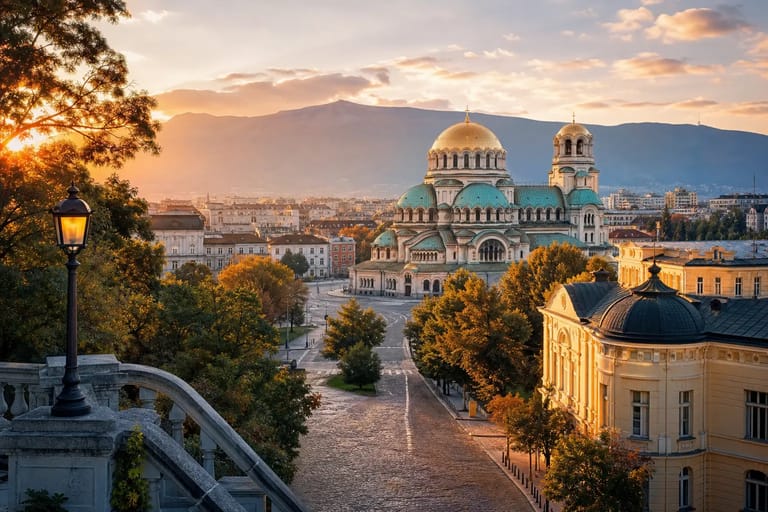
Start with Alexander Nevsky Cathedral — one of the main visual symbols of Sofia. Nearby, you can comfortably explore the square around the temple, the Church of St. Sofia, monuments, and buildings that shape the grand face of the capital. If you plan to enter the temples, consider the dress code and the calm atmosphere of visiting: these are not only tourist sites but also functioning religious spaces.
Next, head toward the central squares and archaeological remnants of ancient Serdica. In Sofia, antiquity is literally embedded in the modern city: fragments of ancient streets and buildings can be seen near transport hubs, administrative buildings, and shopping areas. This is a good point to understand the main feature of the city — it’s not an open-air museum in the classical sense, but a capital where different epochs coexist in everyday life.
Afternoon: Rotunda of St. George, Central Buildings and Urban Contrasts
In the central part, pay attention to the Rotunda of St. George, one of the most recognizable early Christian monuments in Sofia. Nearby, there are monumental buildings from different periods, wide squares, and underground passages that are not always intuitive for a first visit. Move without haste: in Sofia, it’s important not only to "check off" but also to see how the city changes from quarter to quarter.
For lunch, choose an area around the central streets or Vitosha Boulevard. Tourist spots there may be more expensive and crowded, so it’s useful to turn onto adjacent streets: they are often quieter, and the choice of cafes and restaurants is wider. Exact prices and service conditions change, so check the menu, payment method, and whether additional charges are included before ordering.
Evening: Vitosha Boulevard, Ivan Vazov Theatre, and Urban Parks
In the evening, it’s great to stroll along Vitosha Boulevard — one of the most popular walking streets in the city. From there, it’s easy to reach green areas and the Ivan Vazov Theatre, then choose a spot for dinner. If the day has been busy, don’t plan long trips in the evening: the center of Sofia is more pleasantly perceived at a slow pace, especially when the buildings are illuminated and the city becomes less businesslike.
What to Add on the Second Day
The second day is better dedicated to things that cannot fully be included in a one-day center. Here, there are three successful scenarios: cultural, natural, and mixed. The choice depends on the season, weather, physical condition, and whether you are traveling with children.
Option 1: Boyana Church and Vitosha
The Boyana Church at the foot of Vitosha is one of the most significant historical and cultural sites in the vicinity of Sofia. A visit usually requires separate planning: you need to consider the road, possible entry restrictions, opening hours, and viewing rules. Before your trip, be sure to check the current information on the official website of the site or with a reliable tour operator.
If the weather is good, after visiting Boyana, you can continue the day with a walk towards Vitosha. The mountain is visible from many districts of Sofia and makes the city special: it’s a rare case when a capital trip easily combines with nature. However, don’t perceive Vitosha as just an ordinary city park. For longer routes, you'll need comfortable shoes, water, weather-appropriate clothing, and checking transport accessibility.
Option 2: Museums and a Relaxed Urban Program
If you are visiting in winter, with children, or in rainy weather, it makes sense to dedicate the second day to museums, galleries, and leisurely areas. Sofia has historical, artistic, and thematic exhibitions, but schedules, days off, and entry conditions may change. Don't make plans without checking: especially if you are changing routes for a specific museum.
Option 3: gastronomy, markets, and local neighborhoods
For those who have already seen the main landmarks, a day without a strict list of attractions will be suitable: breakfast at a café, stroll through the markets, local bakeries, small shops, parks, and an evening at a bar or restaurant. Sofia is perceived in this format not as a 'transit capital', but as a lively city where it’s important to observe the details.
Where to stay in Sofia: neighborhoods for tourists
For a short trip, the neighborhood is more important than the hotel category. If you stay too far from the center, time saved on accommodation may be spent on transport. The optimal strategy for a first visit is to stay somewhere that allows you to return in the evening by foot or a short ride on the metro or taxi.
| The area | Who it suits | Pros | What to pay attention to |
|---|---|---|---|
| Center and Serdika | First visit, 1 day, maximum attractions | Many places nearby, convenient for walking, good transport connectivity | It may be noisier, the quality of accommodation varies greatly |
| Vitosha Boulevard | For those who want cafés, shops, and nightlife nearby | Strolling atmosphere, many establishments, convenient without a car | Popular spots can be more expensive and livelier |
| NDK and surrounding areas | For couples, business trips, and lovers of convenient logistics | Balance of the center, transport, and quiet streets | Check how close a specific address is to the metro |
| Oborishte and park areas | For those seeking a calmer atmosphere | Pleasant streets, greenery, access to the center | Hotel options may be less obvious, a map is important |
| Near the airport | Early departures, late arrivals, transit | Less risk of missing the flight | Not the best option for evening strolls in the center |
| At the foot of Vitosha | For those going for nature or tranquility | Closer to the mountain, quieter, more fresh air | For classic tourism, more travel will be required |
When choosing accommodation, pay attention not only to the rating but also to practical details: elevator, heating or air conditioning seasonally, sound insulation, late check-in, payment method, real photos of the entrance, and distance to the nearest station or stop. In older central buildings, the atmosphere can be wonderful, but the amenities don't always meet expectations.
How to get around Sofia
In the center of Sofia, the best transport is your feet. The main attractions are close enough, and walking allows you to see details that are easily missed from a car. However, you shouldn't completely ignore public transport: it is useful for the airport, remote areas, bad weather, and trips to Vitosha.
Metro, trams, buses, and trolleybuses
Sofia has a metro and an extensive network of surface transport. For tourists, the metro is usually easier: clear stations, predictable movement, and convenience when traveling between key zones. Surface transport is useful where the metro does not go, but routes and schedules are better checked before departure in current apps or on the carrier's official resources.
Payment systems, fares, transfers, and validation rules may change. Do not rely on old reviews: check current payment methods and ticket requirements before your trip. This is especially important if you are traveling with luggage, a child, a pet, or planning multiple transfers.
Airport and first transfer to the city
Many tourists start their acquaintance with Sofia at the airport. Usually, you can reach the center by public transport or taxi, but the choice depends on the arrival time, terminal, luggage, and the accommodation address. When arriving late, check the current transport schedule in advance and order a taxi only through a reliable channel to avoid inflated costs or misunderstandings.
Taxi and app rides
Taxis are convenient for evening returns, trips with luggage, and routes where public transport requires transfers. However, rules, fares, and the availability of services change, so check the current conditions before traveling. Practical advice: look up the approximate fare before boarding, verify the carrier's name, don't agree to unclear verbal terms, and save the route in your navigator.
Car Rental
For 1–2 days in Sofia, a car often causes more trouble than it helps: parking, traffic, and unfamiliar rules take time. A car makes sense if Sofia is the starting point for a trip around Bulgaria, for example to monasteries, mountains, or other cities. In this case, check rental conditions, insurance, deposit, parking rules, and document requirements with the specific provider in advance.
Practical checklist before the trip
- Choose a format: just the center, center plus Vitosha, center plus museums, or a gastronomic weekend.
- Book accommodation so that main evening spots are accessible by foot or without complex transfers.
- Check the current opening hours of the cathedral, museums, Boyana Church, and other places that are important to you.
- Clarify the transport payment rules and save an offline map of the city.
- Wear comfortable shoes: even a short route through the center can easily turn into a long walk.
- Check the weather: Sofia is at the foot of the mountains, so conditions can be different from sea cities in Bulgaria.
- If you plan to visit Vitosha, do not embark on the route without evaluating the weather, shoes, water, and return transport.
- For late arrivals or early departures, plan for a taxi or accommodation closer to the airport in advance.
Sample itinerary for 2 days without overload
Day 1: Alexander Nevsky Cathedral, St. Sofia Church, central squares, St. George's Rotunda, ancient Serdica, lunch in the center, stroll along Vitosha Boulevard, Ivan Vazov Theater, and dinner.
Day 2: In the morning, Boyana Church or museum program, in the afternoon a walk in the park or local area, in the evening a quiet dinner without long transfers. If choosing Vitosha, do not plan many museums on the same day: travel and nature require time.
Seasonality: when Sofia is especially convenient
Sofia is interesting year-round, but experiences will vary. Spring and autumn are usually more comfortable for walking in the center and parks. In summer, plan breaks in the shade and avoid overcrowding in the middle of the day. In winter, the city can be atmospheric, but weather, short daylight, and pavement conditions require a more flexible plan. For mountain routes, seasonality is especially important: conditions on Vitosha can differ from the center.
Food, coffee, and local atmosphere
Sofia is great for leisurely urban dining: breakfasts, bakeries, cafes, Bulgarian cuisine, modern restaurants, and bars. Don’t limit yourself to the most noticeable tourist streets. Sometimes the best experience is a small establishment in the neighboring quarter, where there are fewer queues and calmer service. If you have dietary restrictions, clarify dish compositions in advance: names may be familiar, but recipes and presentation differ from country to country.
Safety and typical tourist mistakes
Sofia is generally perceived as a regular European capital where basic caution is enough for tourists: keep an eye on belongings in crowded places, don’t leave your phone on the table, choose taxis carefully, check bills, and don’t negotiate about prices after the trip if the terms were not clear in advance. In the evening, choose well-lit streets and don’t rely solely on intuition in unfamiliar crossings and yards.
Typical mistakes: settling far away for minor savings, planning Vitosha without checking the weather and footwear, not verifying the opening hours of sites, trying to combine the city center, museums, Boyana, and mountain in one day, and leaving airport transfers to the last minute. Sofia reveals itself better when the itinerary is realistic.
FAQ: frequently asked questions about the trip to Sofia
Is one day enough for Sofia?
Yes, if the goal is to see the historical center, main temples, ancient Serdica, and evening promenades. However, one day is not enough for Boyana Church, Vitosha, and museums. If possible, take 2 days.
Where is the best place to stay in Sofia for the first time?
For a first visit, the center, Serdika, Vitosha Boulevard, or the NDK area are more convenient. These zones reduce dependency on transport and make it easier to return to the hotel in the evening. Before booking, check the specific street, noise, and metro access.
Does a tourist need a car in Sofia?
For 1–2 days in the city, usually no. Walking, the metro, surface transport, and taxis cover most needs. A car is useful if you are going outside Sofia and are prepared to deal with parking and rental conditions.
Can you go to Vitosha without preparation?
For a short walk—sometimes yes, but it depends on the route, season, and weather. For any longer walk, you need comfortable shoes, water, warm or protective clothing suitable for the season, and a reliable way to return to the city.
What is the best way to get from the airport to the center?
Typically, tourists choose public transport or a taxi. The best option depends on the arrival time, terminal, luggage, and accommodation address. Before traveling, check the current transport availability and use a reliable way to order a taxi.
Is Sofia suitable for a trip with children?
Yes, if you don’t overload the itinerary. Choose accommodation closer to the center or parks, plan short transitions, take breaks in cafes, and check in advance which museums and sites are convenient for visiting with a child.
Output
Sofia for tourists is not a city of one monument, but a convenient capital for a short, rich, and flexible itinerary. Focus on the center and main symbols for 1 day; add Boyana, Vitosha, or museums for 2 days. The key is to stay in the right area, walk where it’s convenient, and check everything that depends on schedules, rates, and the season in advance.