

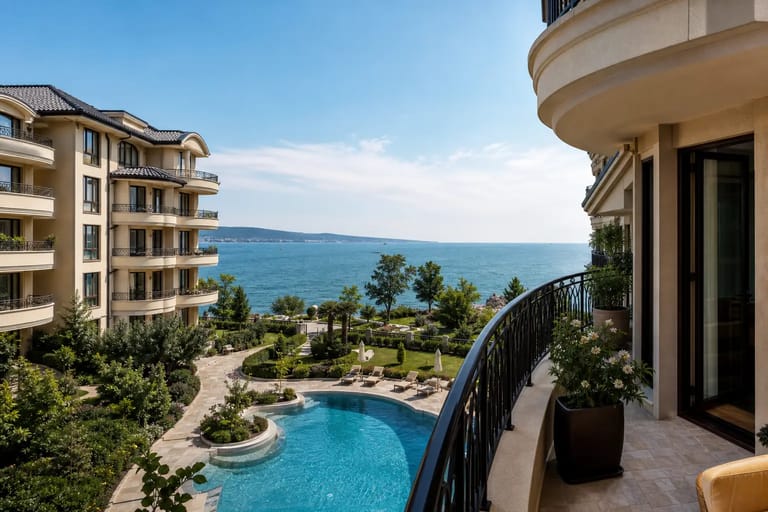
A brief answer: We analyze what is included in the maintenance fee in Bulgarian coastal complexes, how to calculate it, what conditions are risky, and what to check before buying an apartment.
In brief
- The material addresses the topic in simple language and without unnecessary fluff.
- Facts that may change should be verified with current official sources or qualified specialists.
- The structure helps quickly find the main points: steps, nuances, FAQs, and useful internal links.
Maintenance fee in Bulgaria is a regular payment made by the apartment owner for the maintenance of the complex: common areas, pool, elevators, landscaping, security, cleaning, and management. The amount is not universal: it is defined by the contract, the area of the property, the range of services, and the policy of the management company. Before purchasing, it is important to consider not only the apartment's price but also the annual cost of ownership.
- The maintenance fee is especially important for apartments by the sea, as many properties are sold not as a regular urban building but as a resort complex with infrastructure.
- The payment may be calculated based on area, a fixed sum for the property, or a mixed model; the exact formula should be taken from the contract.
- An expensive complex is not always bad: the question is whether the services match the amount and whether expenses can be controlled.
- Danger signs are a non-transparent budget, monopoly of the management company, fines without a clear procedure, and lack of reporting.
- Before making a deposit, ask for the service agreement, payment history, complex rules, and confirmation of debts for the selected apartment.
- If you are buying for rental, the maintenance fee should be factored into income calculations and not treated as a secondary detail.
What is a maintenance fee and why is it so important by the sea
In Bulgarian resort real estate, the term maintenance fee обычно используют для обозначения платы за содержание общих частей and инфраструктуры комплекса. Для покупателя это один из ключевых постоянных расходов после сделки. Налоги, коммунальные платежи and страховка тоже важны, но именно поддержка часто сильнее всего различается от объекта к объекту.
В обычном городском доме расходы чаще связаны с подъездом, лифтом, ремонтом крыши, уборкой and управлением общими частями. В морском комплексе к этому могут добавляться бассейны, рецепция, видеонаблюдение, охрана, садовники, технический персонал, детские площадки, освещение территории, обслуживание паркинга, сезонная подготовка and консервация инфраструктуры.
Поэтому две квартиры одинаковой площади на одном курорте могут иметь совершенно разную стоимость владения. Первая — в простом доме без бассейна and закрытой территории. Вторая — в комплексе с несколькими бассейнами, большой зеленой зоной, круглогодичной охраной and управляющим офисом. Цена покупки может отличаться не так драматично, как ежегодные расходы.
How much do owners pay: how to calculate correctly
Without checking the specific contract, it is impossible to name a correct amount for a particular apartment. In practice, the buyer needs to find out not the average figure for the resort but three things: the calculation base, the rate or fixed payment, and the list of included services. Any verbal estimate from the seller must be substantiated by a document.
Main calculation models
- By area. The payment is calculated per square meter per year or for another calculation period. It is important to clarify whether they take total area, built-up area, ideal parts, or another base.
- Fixed amount per apartment. All owners pay the same or by categories of properties. This model can be convenient but sometimes unfair for small studios.
- Mixed model. Part of the expenses is fixed, and part depends on area, number of users, parking space, or additional services.
- Separate additional payments. Pool, parking, internet, cleaning inside the apartment, property management, or repairs may be paid separately, even if the complex is advertised as serviced.
For evaluation, use a simple formula: annual maintenance fee plus local mandatory payments plus utility expenses during use plus reserve for repairs and unforeseen expenses. If the apartment is purchased for rent, add expenses for property management, cleaning after guests, consumables, and possible downtimes.
Practical rule: compare not only the price per square meter when buying but the total cost of ownership over several years. A cheap apartment with an expensive maintenance fee may turn out to be less profitable than a more expensive property but with transparent and moderate annual expenses.
Example of calculation without reference to the market
Предположим, у покупателя есть два варианта. Вариант А дешевле при покупке, но договор предусматривает ежегодный платеж по площади and отдельные доплаты за часть услуг. Вариант Б стоит дороже, но имеет простую фиксированную поддержку and понятный список включенных работ. Чтобы сравнение было честным, нужно посчитать расходы за условные пять лет: покупка, поддержка, коммунальные платежи, ремонт, управление арендой and возможная перепродажа.
Такой расчет часто меняет впечатление от сделки. Особенно если покупатель планирует приезжать на две-три недели в год: тогда высокая инфраструктурная такса может фактически превращать короткий отпуск в дорогое владение недвижимостью.
What is usually included in the maintenance fee
The list of services should be checked in the contract and the rules of the complex. Below are typical categories that often appear in resort properties, but they should not be viewed as a guaranteed list for every transaction.
| Expense category | What it may include | What to clarify before purchase |
|---|---|---|
| Common areas | Cleaning of entrances, corridors, stairs, lighting, minor maintenance | How often cleaning is conducted and who controls the quality |
| Equipment and engineering | Lifts, pumps, gates, access systems, area lighting | Is there regular maintenance and a separate fund for major repairs? |
| Territory | Landscaping, watering, paths, children's areas, garden furniture | What territory belongs to the complex and who services it? |
| Pool and seasonal infrastructure | Cleaning, chemicals, preparation for the season, conservation after the season | Is the pool seasonal only and are all expenses included in the payment? |
| Security | Guarding, video surveillance, access control, reception | Is this a real round-the-clock service or limited staff presence? |
| Management | Payment administration, communication with owners, contractors | Are there reports, estimates, owner meetings, and a clear decision-making process? |
The main question is not how long the list of services is, but how verifiable it is. If the seller says, 'all inclusive,' ask for clarification. If the management company responds with general statements, this is a reason for a deeper investigation.
Why can the fee be high?
A high maintenance fee does not always mean overpayment. A large complex with pools, elevators, security, landscaping, and year-round staff indeed incurs higher costs. The problem arises when the amount does not match the quality, and the owner does not understand what they are actually paying for.
Factors that increase payments
- Large territory. The more gardens, paths, lighting, and decorative areas there are, the higher the maintenance costs.
- Multiple pools. Water, chemicals, filtration, personnel, and seasonal work require a budget.
- Few apartments. If the infrastructure is expensive and there are few owners, costs per person may be higher.
- Year-round service. Security, reception, and technical personnel off-season cost money, even if the owners hardly visit.
- Weak payment occupancy. If some owners do not pay, the management structure may try to cover the deficit from disciplined owners, if the contractual model allows.
- Complex architecture. Elevators, underground parking, fountains, SPA areas, and complex engineering systems increase the risk of expensive repairs.
It's important for the buyer to distinguish objectively expensive service from an opaque model. The first option may be acceptable if you actually use the infrastructure and see the quality. The second is a risk, as expenses can rise and there will be few levers of influence.
Red flags of an expensive or problematic complex.
The most dangerous scenario is buying an apartment at an attractive price, only to find out that annual payments are higher than expected, conditions are difficult to change, and selling the property is complicated precisely because of maintenance costs.
- There is no written service contract before the deposit. If conditions are shown only after money is paid, the buyer loses their negotiating position.
- The amount is only stated verbally. Promises from the agent or seller do not replace a contract and the decisions of the owners.
- Unclear calculation basis. It is necessary to understand to which area the payment applies and whether the base can change.
- No reporting. If owners are not provided with estimates, reports, or decision-making rules, controlling expenses becomes difficult.
- The management company is effectively unchangeable. Long-term exclusive terms without a clear revision procedure pose a significant risk.
- Penalties and fines are described rigidly, while the duties of the manager are vague. The balance of rights and obligations should be reasonable.
- There are conflicts among owners. Massive debts, disputes, abandoned areas, and poor reviews from neighbors require separate verification.
- Too many 'free' promises. Often, free service ends up being included in another fee or only available for a limited period.
Checklist: what to request before purchasing.
This checklist is useful before signing the preliminary contract and especially before making the deposit. If the seller or agent avoids answers, it’s better to pause and involve an independent lawyer or real estate consultant.
- An active service contract or draft of the contract that the new owner must sign.
- The exact payment amount for the chosen apartment for the current billing period and the principle of its calculation.
- Information on the seller's debts regarding maintenance fees and other payments, if such debts could affect the transaction.
- A list of services included in the payment and a list of services that are paid separately.
- Rules for using the pool, parking, territory, common areas, and guest infrastructure.
- Procedure for changing the fee: who makes the decision, how owners are notified, whether there are meetings and minutes.
- Financial reporting or at least a sample annual estimate, if provided to the owners.
- Information on major upcoming repairs: roof, facade, elevators, pool, engineering systems.
- Contacts of the management company and the possibility to ask questions directly, rather than only through the seller.
- Comparison with similar properties without a pool or with less infrastructure, to understand what you are paying for.
Additionally, it is useful to study materials on hidden costs when purchasing property in Bulgaria and legal verification of the property before the transaction. These topics complement the issue of maintenance: the apartment itself may be legally clear but financially inconvenient due to management conditions.
How to negotiate maintenance fees.
The buyer cannot always change the conditions of the complex. In an already operating property, the rules are often the same for all owners. But this does not mean that negotiations are useless. You can discuss the purchase price, repayment of the seller's debts, payment for the current year, document transfer, and written confirmation of terms.
What can be attempted to agree upon.
- To ensure that the seller fully settles the maintenance debt before the notarial registration or other key stage of the transaction.
- To specify in the purchase agreement or accompanying documents who will pay for the maintenance for the current year or season.
- To require the agent to provide written confirmation of the current amount from the management company.
- To ensure that the purchase price takes into account high future expenses if the maintenance fee significantly reduces the property's appeal.
- To make sure the buyer receives all complex rules before the final decision, not after the transaction.
It is important not to perceive a discount as a victory if it is less than future overpayments. For instance, a one-time concession during the purchase may seem pleasant, but high annual maintenance fees over several years will outweigh it. Therefore, consider the ownership horizon, not just the starting price.
Who may find an expensive complex justified
Дорогая инфраструктура имеет смысл, если вы действительно получаете от нее пользу. Семья с детьми, которая проводит у моря весь сезон, может ценить бассейн, охрану, ухоженную территорию and управление на месте. Владелец, который сдает квартиру отдыхающим, иногда выигрывает от красивой территории and сервиса, потому что объект легче показывать and продвигать.
Но для покупателя, который приезжает на короткий отпуск and не планирует аренду, большой курортный комплекс может быть избыточным. Ему может подойти обычный дом ближе к городской инфраструктуре, пусть без бассейна and рецепции. Расходы будут зависеть от конкретного объекта, но сама логика выбора меняется: меньше инфраструктуры — меньше потенциальных обязательств.
Comparison of options: complex or regular house
| Criterion | Resort complex | Regular residential house |
|---|---|---|
| Infrastructure | May have a pool, security, grounds, reception | Usually only basic common areas |
| Size of maintenance fees | Often higher due to the range of services | Usually depends on owners' decisions and the condition of the house |
| Expense control | May be limited by management company conditions | More often depends on owners' organization and resident activity |
| Rental potential | Infrastructure can help with seasonal rentals | More influenced by location, condition of the apartment, and access to the beach |
| Risk of overpayment | Higher if services are hardly used | Lower in terms of service, but costs for house repairs may arise |
| Who it suits | For those who want a resort format and are willing to pay for services | For those who prefer simpler ownership and less mandatory infrastructure |
How not to fall for an expensive complex: practical algorithm
- First, determine your ownership scenario. Will you be living permanently, coming in the summer, renting to tourists, or keeping the apartment as a long-term asset? This affects the acceptable level of support.
- Filter out properties without transparent terms. If the terms cannot be explained in writing, do not proceed to the deposit.
- Compare at least three alternatives. Consider not only apartments in similar complexes but also regular houses in the same location.
- Calculate expenses for several years. Include support, utility payments, repairs, management, taxes, and potential downtimes when renting.
- Talk to the owners. If possible, ask neighbors about the quality of service, increase in fees, and the management company's response to issues.
- Check for debts and obligations. Ensure there are no unpaid amounts on the apartment that could become a subject of dispute post-purchase.
- Show the documents to a lawyer. Especially if the service contract is long, contains penalties, automatic renewals, or complex conditions for changing the terms.
Evaluate liquidity separately. In the secondary market, buyers often ask about the support fee first. If the fee is considered excessive for the quality of the complex, it may narrow the pool of future buyers.
FAQ
Can I refuse to pay the support fee if I don't use the pool and don't visit?
Typically, the obligation to pay depends not on actual usage, but on ownership rights and the management of common areas or the service contract. However, the specific answer depends on the complex's documents and applicable rules. Before refusing to pay, legal advice is necessary; otherwise, debt, penalties, or disputes may arise.
Is the support fee paid monthly or annually?
The frequency is determined by the specific complex's documents. Often, the owner is charged for the season or year, but other schemes may be possible. It's important to clarify the payment term, currency or unit of account, payment method, consequences of late payment, and the billing process.
Can the management company increase the fee?
The possibility of changing the payment depends on the contract, owners' decisions, and applicable management rules. The buyer should find out in advance who makes the decisions, whether owners' consent is required, how changes are documented, and if there are any restrictions. A verbal promise of 'not to increase' is not a reliable safeguard.
What to do if the service quality is poor?
First, document the issue: photos, correspondence, requests, invoices, responses from the management company. Then review the contract and the complaint submission process. In some situations, collective owner appeals can help. If the dispute concerns money or obligations, it's best to consult a lawyer in Bulgaria.
Should the support fee be considered when calculating rental yield?
Yes. It is one of the mandatory expenses for the owner. For an honest calculation of yield, consider support, taxes, utility payments, management fees for rental, cleaning, repairs, consumables, seasonality, and downtime periods. Without this, the yield will appear better than it actually is.
Which is better to buy by the sea: a complex with high support or a house without a pool?
The best option depends on the goal. For family vacations and short-term rentals, infrastructure can be a plus. For rare visits, peaceful ownership, and minimizing expenses, a regular house may be more rational. The decision should be made after comparing the total cost of ownership and management quality.
Output
The support fee in Bulgaria is not a formality, but one of the main parameters for choosing an apartment by the sea. It affects the annual budget, rental yield, comfort of ownership, and future resale. Do not buy a property until you've seen the written terms, calculation formula, list of services, and payment change procedures. A good complex should be not only beautiful but also financially understandable.