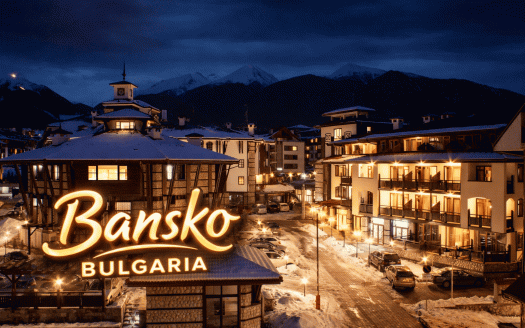


A foreigner can to buy an apartment in Bulgaria, but a safe transaction requires not only the selection of the property and the deposit. It is important to check ownership rights, debts, permits for the building, terms of the preliminary contract, legality of payments, and then sign the notarial deed with a Bulgarian notary. All current requirements for 2026 should be confirmed with a lawyer, notary, and bank.
In brief
- The main goal of the buyer is not just to find a cheap apartment but to obtain clear ownership rights without hidden debts, disputes, and technical problems.
- It is especially important for foreigners to check ownership rules in advance if the transaction involves land, a land share, house, plot, or property in a complex.
- Key stages: location selection, viewing, legal and technical verification, preliminary contract, payment, notarial transaction, registration, and transfer of utilities.
- Do not sign documentsthat you do not understand: contracts are usually prepared in Bulgarian, and a translation and independent lawyer reduce the risk of error.
- Expenses beyond the price may include notarial, local, banking, translation, legal, and brokerage fees; amounts should be clarified before the transaction.
- The property itself does not guarantee the right to reside: visa and migration issues are checked separately.
What exactly does a foreigner buy: an apartment, shares, and restrictions
Before buying an apartment in Bulgaria, a foreigner needs to understand the subject of the transaction. In a typical apartment, the buyer acquires a specific independent unit in the building and shares in the common areas. In some cases, the property may be tied to a land share, a right of use, a parking space, a storage room, or part of the complex's infrastructure. The legal structure depends on the documents for the property.
The most sensitive area is land. For citizens of different countries and different types of properties, the rules may vary. Buying an apartment in a multi-story building is usually simpler than buying a house with a plot or land for development, but that does not mean the verification can be skipped. If the property includes a land plot, a share of the plot, a townhouse, villa, or building in a gated complex, it is essential to request a written conclusion from a Bulgarian lawyer on the permissible ownership scheme for your situation.
It is also worth distinguishing between purchases for recreation, permanent living, renting, and for investment resale. The same property may look attractive in photos but be inconvenient in winter, expensive to maintain, weak in liquidity, or difficult to rent out.
Step 1. Define the purpose of the purchase and budget before viewings
Most mistakes start with a vague request: I want an apartment by the sea, cheap, and suitable for renting. This is not enough for a practical deal. Before talking to agents, formulate criteria that can be verified.
- Usage scenario: vacation, relocation, remote work, retirement, rental, capital preservation, combined scenario.
- Type of location: big city, seaside resort, suburb, historic city, mountain area, small settlement.
- Seasonality: will the area be lived in winter, do shops, transport, medicine, and the management company operate outside the tourist season.
- Total budget: property price plus associated costs, repairs, furniture, annual maintenance, utility bills, trips, and taxes.
- Willingness to manage: will you be able to personally check in, control rentals, communicate with the management company, and resolve household issues.
Practical example: an apartment in a seaside resort may be convenient for summer holidays but not always suitable for year-round living. An apartment in Sofia, Varna, Burgas, or Plovdiv may be more practical for work, medicine, and schools but will require a different budget and a different logic for selecting the area. All price indicators change rapidly, so they should be checked against recent listings, real deals, and consultations with local specialists.
Step 2. Choose a location not based on advertising but on life criteria
In Bulgaria, the real estate market is heterogeneous. Seaside resorts, large cities, small towns, and rural areas operate under different rules. For a foreigner, it is especially important not only to consider the view from the window and distance to the beach but also access to infrastructure, quality of building management, liquidity, and legal cleanliness of the property.
| Type of location | When approaching | What to pay attention to |
|---|---|---|
| Major city | For living, working, studying, healthcare, and long-term rental | Area, transport, condition of the building, parking, noise, future liquidity |
| Seaside resort | For recreation, seasonal rental, purchases by the sea | Seasonality, maintenance fee, operation of the complex in winter, off-season demand |
| Suburb | For peaceful living and more space | Transport, roads, utility connections, legal status of the land |
| Small town | For budget living and low density | Healthcare, shops, job market, liquidity upon sale |
| House or villa | For autonomous living and land | Land restrictions, condition of structures, utilities, maintenance costs |
If you are buying remotely, don't limit yourself to a video tour. Ask to show the entrance, facade, yard, parking, neighboring buildings, the road to the shop, condition of the elevator, and common areas. An apartment does not exist separately from the building and the area.
Step 3. Select the property and check the seller
After selecting the location, the primary selection begins. You shouldn’t immediately transfer a deposit just because you liked the property. First, you need to understand who is selling the apartment, on what basis, whether the representative has the authority, and whether the actual state of the property matches the documents.
The minimum logic of verification looks like this: the seller must prove the right to dispose of the property, the property must be identifiable in the documents, and the terms of the deal must be clear before payment. If the seller acts through a representative, the authority of that person should be verified separately. If a developer is selling, it’s important to check not only the apartment but also the permitting, construction, and financial aspects of the project.
Red flags at the selection stage
- The seller rushes for a deposit before document verification.
- The price is significantly lower than similar offers without clear explanation.
- They promise guaranteed returns but do not provide a transparent expense model.
- Documents are shown partially, outdated copies, or only after payment.
- The area, floor, view, or intended use of the property in the advertisement differs from the documents.
- There is unclear debt for maintenance, utilities, or building repairs.
- The buyer is offered to sign a contract in an incomprehensible language without an independent translation.
Step 4. Conduct a legal check before the preliminary contract
Legal verification is a central stage of the transaction. Its task is not to create a nice folder, but to answer specific questions: who is the owner, are there any encumbrances, can the property be sold, are third parties' rights not violated, does the property match its description, are there any debts or technical problems.
The exact list of documents depends on the type of property, the municipality, the seller, the construction stage, and ownership history. Therefore, a universal list here would be a dangerous simplification. In practice, a lawyer and a notary usually analyze ownership documents, cadastral and technical information, the seller's family status and powers, the presence of encumbrances, debts, the status of the building, and management conditions. An up-to-date list should be requested from a Bulgarian lawyer or notary for a specific property.
If the apartment is in a complex, additionally study the management rules, the amount and procedure for paying the maintenance fee, owner responsibilities, restrictions on renting, renovations, pet ownership, pool use, parking, and common areas. For a foreigner, this can be as important as the purchase price.
Step 5. Check the technical condition and future expenses
A legally clean apartment can turn out to be expensive to maintain. Before the transaction, it’s advisable to carry out a technical inspection, especially if the property is old, on the top floor, has been vacant for a long time, is located by the sea, or is being sold after renovation. Moisture, weak electricity, heating issues, cracks, poor waterproofing, and noise may not be visible in photographs.
Check what is included in the price: furniture, appliances, air conditioners, boiler, kitchen, lighting, storage room, parking space. Document this in the contract or annex if the lawyer confirms such a format. For properties by the sea, it is worth separately assessing corrosion, ventilation, façade condition, and quality of building management. For year-round living, heating, internet, medical infrastructure, and winter transport are important.
Step 6. Preliminary contract: what must not remain verbal
In many transactions, a preliminary contract is signed before the notarial deed. Its purpose is to fix the price, property, parties, deadlines, payment procedure, obligations of the seller and buyer, conditions for withdrawal, consequences of a breach, and the moment of ownership transfer. This is a legally significant document, so it should not be treated as a formality.
Do not sign a preliminary contract if it is unclear which property is being sold, who bears the costs, when the keys are handed over, what happens if the bank refuses or the transaction is impossible, which documents the seller must provide, and whether the deposit is returned in case of legal problems. All wording should be checked by a specialist acting in the buyer's interests, not just by the agent or seller's representative.
Practical rule: A deposit only makes sense after a basic check of the property and the seller. If the check is not yet complete, the conditions for returning the money in case of serious legal issues should be written as clearly as possible.
Step 7. Payment: safety is more important than speed
Real estate payments must be transparent and comply with the requirements of the bank, notary, currency control, and financial monitoring rules. The specific payment procedure depends on the amount, bank, buyer's citizenship, source of funds, and agreements between parties. Before the transaction, clarify whether an account in a Bulgarian bank is needed, what documents regarding the source of funds will be required, how the bank relates to transfers from your country, and what commissions apply.
It is not advisable to transfer large sums in cash or transfer money to personal accounts without clear contractual grounds. A safe scheme usually involves a clear contract, identification of parties, verifiable bank payments, and an agreed moment for settlement. Details should be confirmed by the lawyer and bank before signing the documents, not on the day of the transaction.
Step 8. Notarial deed: the final stage, but not the end of the process
The notarial deed is the key document in a real estate transaction in Bulgaria. Signing occurs with a competent Bulgarian notary after verifying the identity of the parties, powers, and necessary documents. A buyer who does not speak Bulgarian should discuss translation and the procedure for the translator's participation in advance, if required.
On the day of the transaction, it is important not to rush. Verify the parties' details, property description, price, payment procedure, presence of furniture or additional items if included, and ownership transfer conditions. If the buyer cannot be present in person, transactions through a representative are possible, but the form, scope, and validity of the power of attorney should be confirmed in advance with a Bulgarian specialist.
After signing the notarial deed, a registration and administrative stage usually follows: formalizing the title record, obtaining copies of documents, registering in the relevant local systems, re-registering utility contracts and relations with the management company. Specific actions, timeframes, and institutions depend on the property and municipality, so ask the lawyer for a step-by-step list specifically for your transaction.
Buyer's checklist before signing
- The purpose of the purchase and the term of ownership is formulated in writing.
- You have compared several neighborhoods, not just a few apartments.
- The property has been inspected in person or through a trusted specialist with detailed video.
- The seller and their powers have been verified by an independent lawyer.
- Ownership rights, encumbrances, debts, and property status have been checked.
- All expenses beyond the purchase price are understood.
- The preliminary contract has been translated and verified before signing.
- The terms of the deposit, returns, and penalties are clearly stated.
- The bank has confirmed the possibility of payment and documentation requirements in advance.
- It is clear who and when will hand over the keys, furniture, meters, and access.
- The re-registration of utilities and management has been planned after the notarial deed.
Expenses after purchase: what to factor into the financial model
The price in the advertisement is not the full budget. Purchasing and subsequent ownership may involve notarial, local, registration, banking, translation, legal, and agency expenses. After the transaction, the owner usually bears current utility payments, building or complex maintenance costs, repairs, optional insurance, local taxes, and possible rental management costs.
Do not use someone else's calculations as a universal norm. The size of payments depends on the municipality, transaction price, type of property, management company, bank, and specific contract. Before making a deposit, ask the agent, lawyer, or management company to prepare a preliminary estimate: one-time transaction costs, annual ownership costs, and potential costs for bringing the apartment to working condition.
Buying on the primary and secondary market: differences
| Criterion | New construction | Secondary market |
|---|---|---|
| Main risk | Construction stage, permits, timelines, builder's reliability | Ownership history, encumbrances, building condition, debts |
| What to check | Project documents, contract with the builder, readiness stage, payment terms | Property rights, technical condition, utility and management obligations |
| Pros | New stock, modern layout, ability to choose finishes | You can see the real condition of the house, neighbors, area, and costs |
| Cons | Risk of delays and changes in conditions | There may be hidden defects and a complicated history of the property |
On the primary market, it is especially important to understand at what stage the property can be purchased safely, which documents confirm the building's readiness, and when the buyer obtains full rights. On the secondary market, the focus shifts to the property's history, the seller, debts, and the actual state of the apartment.
Is it possible to purchase an apartment remotely?
Remote buying is possible in certain situations, but it requires a stricter control system. The buyer will need a power of attorney, clear authorization, an independent lawyer, video viewings, document checks, a secure payment scheme, and clear communication with the notary. All documents signed abroad may require special processing and translation; the current procedure depends on the signing country and the requirements of the Bulgarian side.
If the transaction budget is significant or the property is complicated, it's better to come at least for the final inspection and signing. A personal visit helps to see what is not included in advertising materials: the smell of moisture, road noise, the condition of neighboring apartments, the quality of the area in the evening, whether the elevator works, and the actual distance to infrastructure.
Common mistakes of foreigners
- Buying only by price. A cheap apartment may have high maintenance fees, low liquidity, or document issues.
- Trusting a single intermediary. An agent helps to find a property, but the legal check should be done by an independent specialist.
- Ignoring seasonality. A resort that is wonderful in the summer may be inconvenient for living in the winter.
- Misunderstanding the contract. Signing under a Bulgarian text without translation creates the risk of obligations the buyer was unaware of.
- Lack of a plan after the transaction. Keys received, but services not re-registered, maintenance not paid, no manager appointed.
- Mixing real estate and migration. Buying an apartment does not automatically grant the right to live in the country; the visa issue is resolved separately.
FAQ
Can a foreigner buy an apartment in Bulgaria in 2026?
In general, foreigners participate in transactions with Bulgarian real estate, but the conditions depend on nationality, type of property, and ownership of land or a share of land. Before the transaction, check the current rules with a Bulgarian lawyer or notary.
Is it necessary to open a company to buy an apartment?
For a regular apartment, it depends on the structure of the property and the status of the land. For houses, plots, and some complex properties, this question may be more sensitive. Do not choose a scheme based on forum advice; get a conclusion for the specific property.
Does buying an apartment grant residency in Bulgaria?
The purchase of real estate itself should not be regarded as an automatic guarantee of residence. Migration grounds, visas, residence permits, and applicant requirements should be checked separately according to the current regulations at the time of application.
Is it possible to sign a deal without knowing Bulgarian?
Yes, but the buyer must understand the content of the documents. In practice, translation, the involvement of a translator, and a review of the contract by an independent specialist are discussed in advance. Do not sign text whose meaning is unclear to you.
When is it safe to pay a deposit?
It's safer to pay a deposit after an initial check of the seller and the property or on the condition that the contract explicitly provides for a refund in case of significant legal issues. The terms of the deposit should be documented in writing.
What is more important: an agent or a lawyer?
They have different roles. An agent finds the property and assists with negotiations, while a lawyer checks rights, risks, and documents. For a foreigner, an independent lawyer is not a luxury, but a necessary element of transaction protection.
Is it worth buying an apartment in a resort complex?
It can be convenient for vacation and seasonal rentals, but it's important to check the maintenance fee, the complex's rules, winter operations, the condition of common areas, and real demand. A beautiful pool does not replace legal and financial due diligence.
Output
To buy an apartment in Bulgaria as a foreigner in 2026, one should follow a verified algorithm: purpose, location, property, legal check, technical inspection, preliminary contract, secure payment, notary deed, and post-deal formalities. The most reliable strategy is to not rush with the deposit, not rely solely on advertising, and involve an independent Bulgarian specialist before signing documents. Laws, banking rules, taxes, and notary requirements can change, so the final decision should be based on a current verification of the specific transaction.